University of Florida Engineers Develop New Lab-On-A-Chip Device to Extract and Purify DNA

617362.jpg

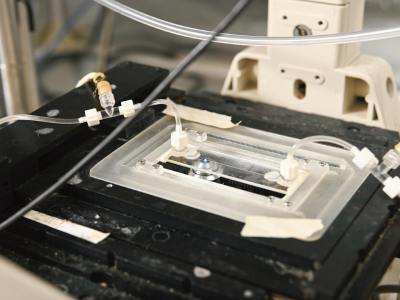
This microscope slide-sized device can extract long DNA from a cell sample. Credit: David Schlenker/UF

University of Florida chemical engineers have developed a novel lab-on-a-chip device which could provide widespread advances in DNA research.

The new microfluidic device, published in the Proceedings of the National Academy of Sciences, improves DNA purification which in the future could increase sample throughput that matches or exceeds the purity provided by current methods.

Just the size of a microscope slide, the microfluidic device developed by the team employs an electric field to push DNA solutions through a 100 micron square channel which distorts and elongates the DNA, allowing the electric field to drive them toward the channel walls.  The push toward the channel walls causes DNA to accumulate, while other sample components are carried away.

Given the relative ease of sample prep offered by the microfluidic device, widespread application after optimizing the device is likely. 

Subscribe to our e-Newsletters!
Stay up to date with the latest news, articles, and events. Plus, get special offers from Labcompare – all delivered right to your inbox! Sign up now!

More News

  • Researchers Propose New Regulations for Food Packaging Chemicals

    Scientists have proposed a new way to prioritize regulatory review of the more than 15,000 chemicals used in food packaging and other food contact materials, most of which currently lack the safety data needed to protect consumers. read more
  • Brain Activity Mirrors the Shape of Each Breath

    Each individual breath—not just breathing rate—is closely linked to the pattern of electrical activity in brain regions tied to cognition, emotion and memory, according to a new study that could help explain how breathing disorders turn deadly. read more
  • Body's Organs Age in Distinct, Synchronized Waves

    The human body doesn't age at a single, steady pace. Instead, each organ follows its own timeline, and organs that age quickly tend to have "aging partners" that speed up in sync, according to a new study that mapped structural aging across 40 types of tissue. read more