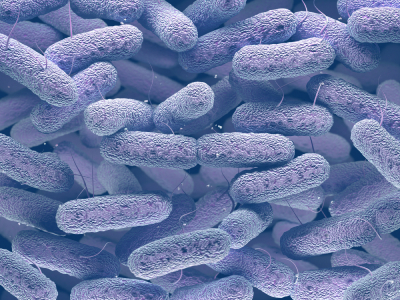
UC Irvine scientists have developed a promising new drug candidate to treat antibiotic-resistant bacteria. Each year around 35,000 people die in the United States from antibiotic resistant bacterial infections, a statistic the researchers hope to reduce with the new drug candidate.
"The issue with antibiotics is this crisis of antibiotic resistance," said Sophia Padilla, a Ph.D. candidate in the department of chemistry, and lead author of the new study. "When it comes to antibiotics, bacteria can evolve defenses against them—they're becoming stronger and always getting better at protecting themselves."
The new family of antibiotics developed by the team is a variation of the common last line of defense antibiotic vancomycin. This new version of vancomycin bonds to and inactivates two molecules on the surface of pathogenic bacteria critical to their cell wall construction. By interrupting this process, researchers believe they can eliminate the need for the continuous drug discovery necessary to target new evolutions of antibiotic-resistant bacteria.
The team hope that their new drug inspires others to explore novel approaches for antibiotic resistant pathogen treatment.
"What's a new way that we can develop an antibiotic that doesn't require us to keep doing the same thing over and over again?" said Padilla. "I think with our approach, and the approach of several others, we're starting to target something that bacteria will most likely not evolve resistance to."