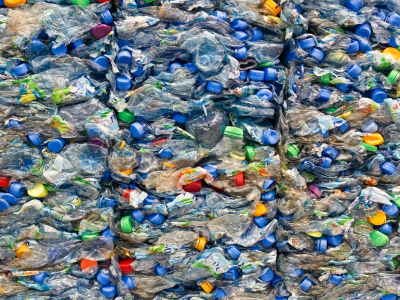
A recent study from the Dalian Institute of Chemical Physics has resulted in the development of novel solid-state nuclear magnetic resonance tech which can be used to accurately characterize plastic waste mixture separation and recycling processes. By being able to directly analyze insoluble samples, solid-state NMR spectroscopy is a powerful tool for complex polymer systems.
Published in the journal Nature, the work conducted by the team included utilizing an innovative NMR method called 1H-13C Frequency Switched Lee Goldburg Heteronuclear Correlation (FSLG-HETCOR) NMR to obtain high resolution “fingerprint” spectra of individual components found in eight plastic mixtures. The mixtures include polystyrene (PS), polylactic acid (PLA), polyurethane (PU), polycarbonate (PC), polyvinyl chloride (PVC), polyethylene terephthalate (PET), polyethylene (PE), and polypropylene (PP).
The team achieved both high signal intensity and good resolution in the indirect dimension in their spectra, allowing them to precisely ID the many functional groups in the plastic mixtures. Furthermore, this allowed them to enable real-time tracking of the chemical evolution of the plastics, demonstrating the effectiveness and universality of the method. The team were able to map each step of the conversion process.
"Solid-state NMR provides a way to identify individual components in plastic waste mixtures. It acts as a 'guiding eye' for the separation and catalytic transformation processes," said Prof. Xu.
The research performed by the team paves the way for the effective separation and transformation of these plastic mixtures. Additionally, it lays the groundwork to integrate existing processes into a unified framework to support scalability in plastic pollution remediation at an industrial scale.