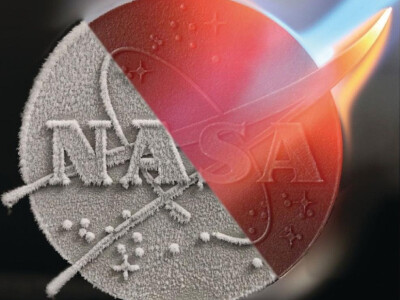
GRX-810 is a new metal alloy developed by NASA for 3D printing parts that can withstand the extreme temperatures of rocket engines, allowing affordable printing of high-heat parts. Credit: NASA
Historically speaking, additive manufacturing use for space exploration has been limited by a lack of affordable metal alloys capable of withstanding the extreme conditions experienced during spaceflight. Now, after development by NASA's Glenn Research Center, the GRX-810 alloy presents a novel, affordable option to the expensive alloys which have previously been used.
Composed of nickel, cobalt, and chromium, GRX-810 also employs a ceramic oxide coating to enhance its heat resistance. Previously oxide dispersion techniques presented a large expense during the manufacturing process, however, thanks to breakthroughs at Glenn, the cast has been reduced.
The benefits of the material, described in a recent NASA press release, are significant. Analysis revealed that GRX-10 is capable of lasting up to a year under stress loads at temperatures up to 2,000°F, conditions which would crack any other affordable alloys within hours.
“A material under stress or a heavy load at high temperature can start to deform and stretch almost like taffy,” said Jeremy Iten, chief technical officer with Elementum 3D, a company which produces GRX-810 for customers in quantities ranging from small batches to over a ton. “Initial tests done on the large-scale production of our GRX-810 alloy showed a lifespan that’s twice as long as the small-batch material initially produced, and those were already fantastic.”
GRX-810 is currently being evaluated by commercial space and other industries.