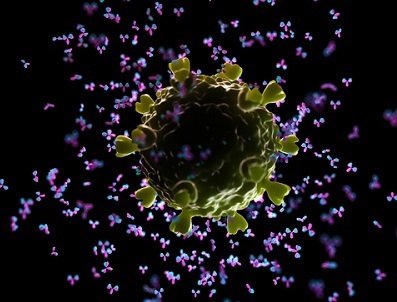
A new study by experienced HIV researchers suggests, for the first time, that a single dose of an antibody-based treatment can prevent HIV transmission from mother to baby.
Even though HIV-positive mothers are given antiretroviral therapy (ART) while pregnant, virus transmission to newborns still occurs. Multiple studies have shown that ART cocktails are detrimental to babies, and continue to affect children over time because of the strict requirements of daily dosing. Additionally, some effects are traceable to neurological damage, resulting in lifelong developmental problems. Contrastingly, in clinical trials, antibodies have been proven safe and well tolerated, regardless of age.
In the current study, co-author Ann Hessel stresses the importance of delivering the single antibody dose to newborns as quickly as possible.
“The virus takes hold literally within hours and sets up a reservoir of infected cells that is extremely hard, if not impossible, to eliminate completely,” Hessel, professor at the Oregon National Primate Research Center at Oregon State University, explained to Laboratory Equipment. “We know from our previous studies that the virus can be detected in tissues around the body within 24 hours of exposure. The powerful antibodies that are now available can intercept, kill infected cells, and thwart further infection, but this is only possible within a short interval of time after the virus is present.”
That interval of time is 30 hours, according to the study. Published in Nature Communications, the researchers report rhesus macaque newborns did not develop the monkey form of HIV, called SHIV, when they received a combination of PGT121 and VRC07-523 antibodies 30 hours after HIV exposure. Delaying treatment until 48 hours, on the other hand, resulted in half of the baby macaques developing SHIV when they were given four smaller doses of the same antibody cocktail.
In terms of the current standard, the study found evidence that a shorter ART course given to newborns after exposure may be just as effective. Human babies born from HIV-positive mothers typically take the drug cocktail for six weeks before being retested; whereas, the current study showed newborn macaques did not have SHIV after undergoing ART for just 3 weeks.
Further research
Thus far, according to Hessel, even the most potent antibody cocktails given after HIV infection is established have not shown a significant effect against the virus. Viral loads are reduced temporarily, but the course of infection does not change. However, it may be possible in the future as new antibody strategies and formulations are being developed regularly.
For now the researchers, including corresponding author Nancy Haigwood and co-author Mariya Shapiro, are working on a strategy to combine ART and antibodies to accomplish a viable therapeutic approach in the infant model.
“By combining ART and antibodies, we hope to see whether the treatments can work better together than either alone, especially when treatment begins later and there are more infected cells,” said Shapiro, who is pursuing her Ph.D. in microbiology and immunology at OHSU. “We are also interested in studying antibodies that may complement the virus-specific antibodies. Antibodies that block HIV from taking hold may be another way to fight against the virus from establishing infection or from quickly spreading to neighboring vulnerable cells.”