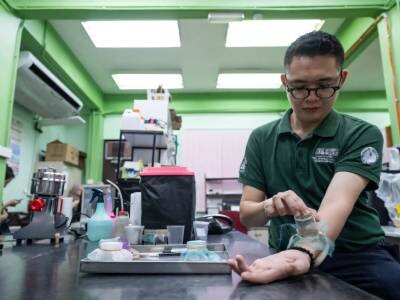
The bloodsuckers, scientific name Cimex hemipterus, are the most common species found in Malaysia and the tropics.
Research from the Science University of Malaysia (USM) has revealed the tropical bed bugs can retain their preys DNA for up to 45 days, making them a potentially ideal source of evidence when conducting forensic investigations.
"We call bed bugs the 'musuh dalam selimut' (Malay for "the enemy in the blanket")," said entomologist Abdul Hafiz Ab Majid, "they can also be spies" when helping to solve crimes.
The research, first described in a publication two years ago, discovered that DNA extracted from bed bugs who had fed on human blood could reveal phenotypic profiling information for up to 45 days after feeding. Using STR and SNP, researchers can determine gender, eye, hair and skin color of potential suspects.
Unlike flying insects who may also feed on human blood, bed bugs cannot fly and in fact after feeding "become engorged and can't move around that much", said Hafiz, adding that after feeding bed bugs can move only 20 feet from where they have fed.
"That's what makes them unique. We can say they are perfect to use as a forensic tool compared to mosquitoes that... fly away," Hafiz added.
The insects are not without limit as a forensic tool, especially for solving cold cases, according to Hafiz, "It only gives investigators a time frame of 45 days to use bed bugs as evidence—and only if they are available at the crime scene," he concluded.