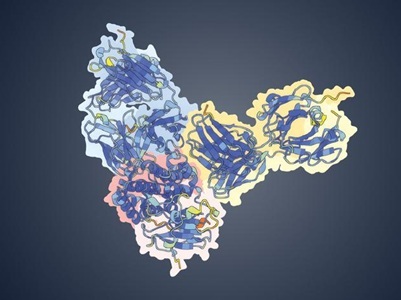
Structure of a surface protein on the monkeypox virus (MPXV OPG153, highlighted in pink) in complex with two neutralizing antibodies: 08E11 (highlighted in blue) and 12I12 (highlighted in yellow). Credit: University of Texas at Austin
Researchers, with the help of artificial intelligence, have identified a viral surface protein that could be used in a new mpox vaccine or antibody therapy.
In 2022, mpox spread around the world, causing flu-like symptoms and painful rashes and lesions for more than 150,000 people, while causing almost 500 deaths. Vaccines developed to fight smallpox were repurposed amid the outbreak to help the most vulnerable patients, but that vaccine is complicated and costly, due to its manufacture from a whole, weakened virus.
Using the blood of patients who had been previously infected with the virus or vaccinated against it, the research team identified 12 that neutralize mpox, but could not determine which parts of the virus they targeted.
The scientists knew at least one of the surface proteins was critical to spread infection, and that it could be blocked by some of the newly identified antibodies—but which ones? They needed to find the right match—between surface protein and antibody—for any new drug or tool to help seed prevention of the infection, known as an antigen.
AI experts used the AlphaFold 3 model to predict which of the roughly 35 proteins on the surface of the virus the antibodies strongly bind to. The model predicted with high confidence that some antibodies would bind to a viral surface protein called OPG153, and follow-up work verified the result. This suggested that the protein would be a good target for developing new antibody therapies to treat mpox or for use in a vaccine to coax a person’s immune system to fight the virus.
“It would have taken years to find this target without AI,” said co-author Jason McLellan, a professor of molecular biosciences at The University of Texas at Austin. “It was really exciting because no one had ever considered it before for vaccine or antibody development. It had never been shown to be a target of neutralizing antibodies.”
The team is now working to develop versions of the vaccine antigen and antibodies that are more effective at fighting disease while cheaper and easier to produce than existing versions that use a weakened version of a closely related poxvirus.
Data from UT Austin