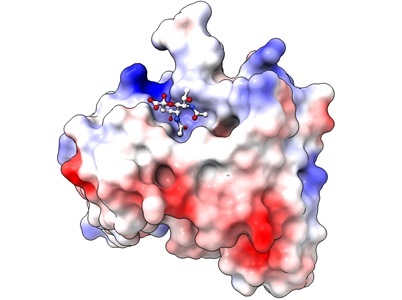
Representation of antibody binding the Pse sugar to target bacteria with this sugar for destruction. Source: WEHI
Australian researchers have developed a new way to target antibiotic-resistant bacteria by designing antibodies that recognize a sugar found only on bacterial cells.
The target of the new antibody is a sugar molecule known as pseudaminic acid. It is produced exclusively by bacteria and used by many toxic pathogens as a component of their outer coats that helps the pathogens evade immune responses. Because humans do not make this sugar, it represents a highly differentiated target for immunotherapy development.
For the study, published in Nature Chemical Biology, the team chemically synthesized the bacterial sugar and sugar-decorated peptides from scratch. This allowed them to determine the exact 3D arrangement of the molecule and how it is presented on bacterial surfaces. Using these insights and molecules, they developed a “pan-specific” antibody capable of recognizing the sugar across a wide range of bacterial species and strains.
In mouse infection models, the antibody successfully eliminated multidrug-resistant Acinetobacter baumannii, a notorious cause of hospital-acquired pneumonia and bloodstream infections.
Passive immunotherapy involves administering ready-made antibodies to rapidly control an infection, rather than waiting for the individual’s adaptive immune system to respond to the infection. This strategy can be used both therapeutically and prophylactically, which could be deployed to protect vulnerable patients in intensive care units.
The antibodies also provide a new tool for understanding how bacteria cause disease.
“These sugars are central to bacterial virulence, but they’ve been very hard to study,” said study co-author Nichollas Scott, associate professor at the University of Melbourne. “Having antibodies that can selectively recognize them lets us map where they appear and how they change across different pathogens. That knowledge feeds directly into better diagnostics and therapies.”
Over the next five years, the team aims to translate these findings into clinic-ready antibody therapies targeting multidrug-resistant A. baumannii.
Data from the University of Sydney