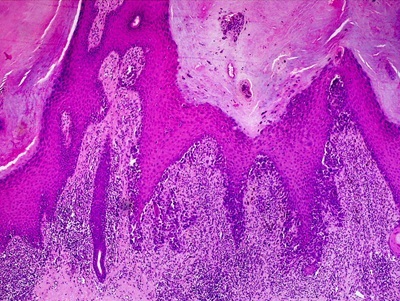
Acral lentiginous melanoma (ALM). Credit: L. Wozniak & K.W. Zielinski
A study of U.S. veterans has identified a possible link between exposure to the Agent Orange herbicide and a rare melanoma subtype less likely to be related to sun exposure. The authors of the study say this link warrants further examination to inform diagnostic strategies for those who may be at a greater risk for acral melanoma.
Acral melanoma is a rare type of melanoma that occurs in areas of the body that are usually not exposed to sunlight, such as the palms of the hands, bottoms of the feet, or under the nails. It is often diagnosed at later stages and doesn’t respond well to current therapies.
For the study, published in JAMA Dermatology, researchers analyzed 2000–2024 data from the Veterans Health Administration, who have unique environmental and occupational exposures and higher melanoma rates than the general population. They compared 1,292 veterans with acral melanoma with 5,168 veterans without melanoma. Veterans with acral melanoma were also compared to veterans with cutaneous melanoma.
Exposure to the herbicide Agent Orange, which was used extensively during the Vietnam War and was banned in the 1970s, was linked with an approximately 30% higher odds of having acral melanoma.
“For veterans who may have been exposed decades ago, this study provides important insight and reinforces the need to keep investing in research that can translate into earlier diagnosis and better outcomes,” said principal investigator Marc Hurlbert, with the Melanoma Research Alliance.
Data from Mass General Brigham