What if doctors could tell you a disease was coming years before you felt a single symptom—and stop it in its tracks?
That is the goal of a sweeping new research initiative coined “ORIGIN: Omics to Characterize Preclinical Stages of Non-Infectious Diseases,” which brings together 10 specialties across Mount Sinai Health System in a multidisciplinary disease-prevention study.
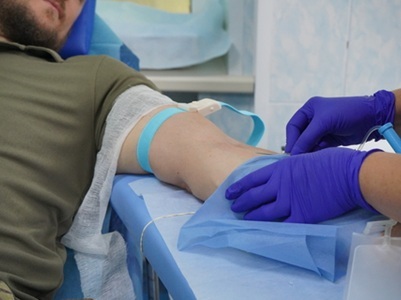
For more than a decade, Jean-Frédéric Colombel, MD, professor of medicine at Icahn School of Medicine at Mount Sinai, has partnered with the Uniformed Services University of the Health Sciences to study inflammatory bowel disease in military personnel using the Department of Defense Serum Repository, which contains millions of longitudinal blood samples. Their research identified molecular signals in the blood years before IBD was diagnosed.
ORIGIN dramatically expands that model. Where the earlier effort focused on one disease, ORIGIN will study more than 25 conditions simultaneously, including rheumatoid arthritis, lupus, multiple sclerosis, Crohn’s disease, neurodegenerative disease, post-traumatic stress disorder, colon cancer, lung cancer and heart failure.
Using advanced “omics” technologies, researchers will analyze proteins, metabolites, environmental exposures, and immune responses from blood samples, integrating these data through sophisticated computational modeling. By uncovering common molecular roots of disease, the team hopes to develop treatments and prevention strategies that work across multiple conditions—and ultimately reclassify illness based on molecular biology rather than the organ it affects.
The researchers will analyze stored blood samples from up to 13,000 active-duty U.S. service members, drawn years before any diagnosis. U.S. military service members receive comprehensive, routine health monitoring from the moment they enlist, creating an extraordinary long-term medical record that is unlike anything available in the civilian world.
The team is hoping this unique repository will allow them to answer questions such as:
- What is happening in the body 5 years before someone is diagnosed with lupus?
- What molecular changes precede early-onset colon cancer by three years?
- How do military-specific environmental exposures like burn pits and PFAS, which are found at more than 700 U.S. military sites, alter the body’s biology and raise disease risk?
The study timeline covers samples collected between October 2003 and September 2025, and the project is expected to run for at least 10 years. Diseases targeted by ORIGIN include conditions that are increasingly common among younger Americans, such as early-onset colon cancer, PTSD, and Crohn’s disease, making its findings urgently relevant far beyond the military community.
Data from Mount Sinai School of Medicine