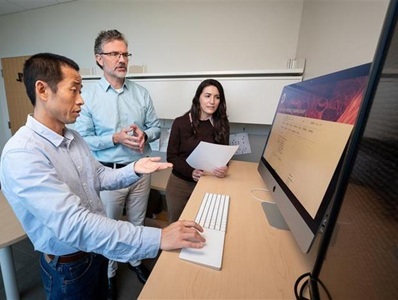
Credit: St. Jude Children's Research Hospital
Scientists at St. Jude Children’s Research Hospital have developed a data-sharing platform that unites genomics, gene expression and clinical information from nearly 6,000 patients with blood cancers. By integrating large pediatric and adult datasets, the ASH HematOmics Program (ASHOP) provides one of the most comprehensive blood cancer data collections to date.
“Large genomic, transcriptomic and clinical datasets for blood cancers have been generated across many studies, but they have remained disconnected,” said senior co-corresponding author Xin Zhou. “ASHOP brings these data together into one accessible platform so researchers can look at hematological malignancies more holistically and analyze them deeper to make novel discoveries.”
The platform includes data from 5,960 patients across multiple blood cancers, including acute lymphoblastic leukemia, acute myeloid leukemia, myelodysplastic syndromes and chronic lymphocytic leukemia. It combines whole genome sequencing, whole transcriptome sequencing and connected clinical outcomes from these samples in one place. Within the platform, users can leverage built-in tools to explore that data, whether looking at cancer types and subtypes, comparing patient groups, or investigating connected clinical outcomes, to perform complex analyses that were not possible before.
Using the ASHOP platform, the researchers showed how combining genetic and gene‑expression data can reveal important differences between patients that are not obvious otherwise. In one example, they identified two developmental subgroups within a form of childhood B-cell leukemia, one of which had more immature, inflammation‑associated cancer cells, specific gene mutations and worse outcomes. In another example, they found that adult patients with NPM1‑mutated acute myeloid leukemia could be divided into groups with different HOX gene activity, mutation patterns and levels of cell maturity, suggesting differences in disease behavior and treatment resistance. Together, these examples illustrate how the portal helps researchers uncover biologically and clinically meaningful leukemia subtypes that may guide future research and patient care.
“Our vision is that ASHOP will provide a user-friendly portal for the sophisticated interrogation of genomic and associated data, not just from cancers, but eventually from the full range of hematological disorders,” said co-corresponding author Charles Mullighan, MBBS (Hons), MSc, MD, St. Jude Comprehensive Cancer Center deputy director and Department of Pathology member. “This study represents an important first step that shows the feasibility and power of the approach.”
ASHOP can be accessed at https://ashop.hematology.org.
Data from St. Jude Children’s Research Hospital