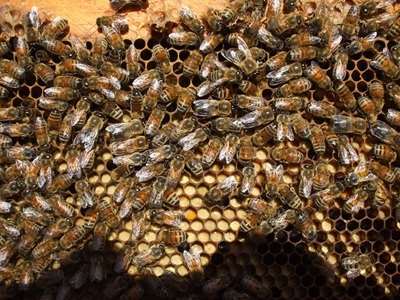
New research from Cornell University suggests that current U.S. organic honey regulations may be far stricter than bees' actual foraging habits require—a mismatch that has locked American beekeepers out of the lucrative organic market.
Under current U.S. Department of Agriculture guidelines, apiaries must be surrounded by a 6.4-kilometer buffer of organic-certified or natural land to qualify for organic certification, alongside FDA limits on pesticide residue. Because it's nearly impossible to find that much untouched land in the continental U.S.—for example, only three producers in Hawaii currently qualify—the country imports most of its organic honey.
In 2023, as part of the study published in Science of the Total Environment, researchers established 72 colonies using organic management practices on six large organic farms in the Northeast to test whether organic farms provided sufficient forage for organic honey production. Over a 3 kilometer radius, each colony was surrounded by land that was between 56% and 93% natural or semi-natural. In 2024, the team screened the honey the bees produced for 96 pesticide residues at the Cornell Chemical Ecology Core Facility and compared it with 20 store-bought brands of organic and conventional honey.
The study results showed the pesticide residues in the honey produced from the colonies were comparable to the certified organic imports and certified organic Hawaiian honeys, with only one Northeastern sample exceeding maximum residue limits. Meanwhile, residue levels from conventional honeys were much higher.
Researchers also tracked bees from their hives to see how far they typically travel when they forage. They determined that the bees’ median foraging distance was closer to 750 meters, far less than the organic guidelines require.
“This study demonstrates that it is possible to produce clean honey that could meet the standards for USDA organic certification in the continental U.S., even though the apiaries were placed in relatively small organic farms,” said senior author Margarita López-Uribe, associate professor of entomology the Pennsylvania State University.
Next, the researchers say they hope to expand these tests to other parts of the country.
Data from Cornell University