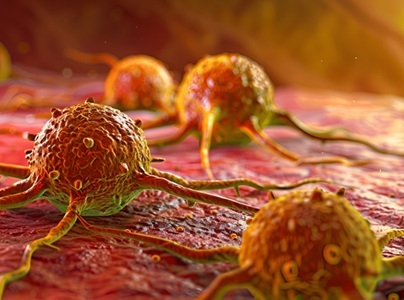
Cancer cells survive by learning to dodge programmed cell death, the body's natural "self-destruction program" for damaged cells. A new review argues that the same escape routes tumors rely on could be turned against them—pointing toward cancer treatment tailored to each tumor's specific molecular dependencies.
The study, published in Cell, examined how tumor cells evade apoptosis and other forms of programmed cell death, and how those evasion mechanisms could be exploited therapeutically.
In a healthy body, apoptosis eliminates damaged or unneeded cells through a controlled molecular program, but cancer cells can circumvent that mechanism and survive even when genetically damaged or under attack from therapy. The drug venetoclax already demonstrates that the process can be used as treatment: it blocks the survival protein BCL-2, triggering programmed cell death in certain blood cancers, an approach now clinically established. Because tumor cells have multiple ways of escaping apoptosis, researchers are increasingly looking at other cell death pathways, including necroptosis, pyroptosis and ferroptosis.
Which protective mechanisms a tumor relies on to survive often depends on its genetic characteristics, and those dependencies could become future therapeutic targets. Ferroptosis is one promising avenue: in this form of cell death, disruptions to iron and lipid metabolism cause harmful oxidation of the cell membrane, a process normally blocked by the enzyme GPX4. Some tumors appear especially dependent on that protection, and blocking it can trigger tumor cell death in experimental models—though the approach isn't yet clinically established.
Identifying which tumors are dependent on which protective mechanisms, while sparing healthy tissue, is where tools like single-cell analysis, omics methods and CRISPR-based screens come in, allowing researchers to map out a tumor's individual survival strategy with increasing precision.
“The crucial question is what exactly keeps this tumor alive,” said Philipp Jost, professor of oncology at the Medical University of Graz. “If we know this dependency, we can specifically try to break its protection against cell death. Once we know this molecular dependency, we can specifically search for a therapeutic vulnerability.”
The long-term goal is a more personalized approach to cancer treatment—one in which a tumor's molecular profile, rather than its organ of origin, determines which cell death pathway should be activated or which survival strategy should be blocked.
Jost's research says they will continue to investigate cell death mechanisms as a foundation for developing these next-generation therapeutic strategies.
Data from Medical University of Graz