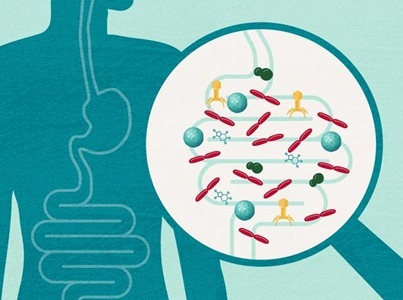
WashU Medicine researchers have rewritten the story on a group of viruses once thought to directly infect human tissue and play a role in gastrointestinal disease. Credit: Sara Moser/WashU Medicine
Researchers at Washington University School of Medicine have solved a 40-year-old mystery about a specific gut microbiome, known as picobirnavirus.
Ever since picobirnavirus was first spotted decades ago, researchers thought it directly infected human tissue and played a role in gastrointestinal illness. Now, the new findings show the widespread virus infects gut bacteria, not human cells. The findings redefine picobirnaviruses as only the third known family of bacteria-infecting RNA viruses ever discovered.
In the study, published in Nature Microbiology, first author Tianyu Gan introduced human stool samples to microbe-free mice, establishing the first laboratory model where picobirnavirus could actively multiply.
Next, Gan and team harvested the viral population from the mouse gut and grew it in lab dishes filled with gut bacteria under oxygen-free conditions. Because mammalian cells cannot survive without oxygen, the virus’ growth over 20 days suggested it was multiplying inside bacteria. Antibiotics that killed off the bacteria also halted the virus from multiplying.
Using advanced molecular imaging and cellular sorting, the researchers found picobirnaviruses inside a newly identified gut bacteria they named Candidatus Anaerotignum faecalis.
The presence of picobirnaviruses in the gut has been linked to clinical conditions including acute diarrhea, graft-versus-host disease and Type 1 diabetes. Although picobirnavirus doesn’t infect human cells directly, it could be destroying beneficial gut bacteria. Moreover, human gut cells can absorb viral particles and spark inflammation, without the virus multiplying inside human tissue.
On the other hand, detecting high levels of picobirnavirus in patients with these conditions does not prove the virus causes disease. Even if it’s not a pathogen, it could serve as a biomarker, signaling gut distress.
Data from WashU Medicine