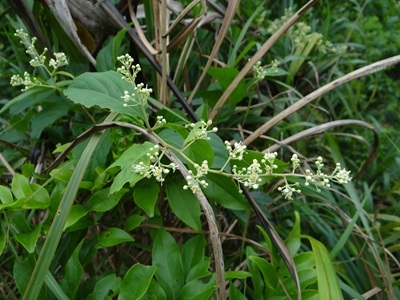
Tripterygium wilfordii. Credit: Lu i-chi via iNaturalist
A natural compound from the thunder god vine may help overcome a built-in defense that lets many cancers resist a class of drugs designed to restore normal gene activity, according to researchers at the Johns Hopkins Sidney Kimmel Comprehensive Cancer Center.
The team found that triptolide, a compound from Tripterygium wilfordii, blocks an enzyme called DCTPP1 that cancer cells can use to break down DNA methyltransferase (DNMT) inhibitors before the drugs can fully work. When the researchers combined triptolide or related compounds with the DNMT inhibitor decitabine, the pairing dramatically boosted the drug’s ability to reactivate tumor suppressor genes and kill cancer cells in laboratory models.
“This gives us a potential way to remove one of the barriers that prevents these drugs from working effectively in many cancers,” said senior study author Vasan Yegnasubramanian, MD, professor of oncology at the Johns Hopkins Kimmel Cancer Center.
For the study, published in Nature Communications, the researchers screened chemical libraries for compounds that could disable those defenses and resensitize cancer cells to the drugs. Triptolide among those identified.
In laboratory-grown cancer cells and animal models, triptolide significantly increased both the gene-regulating and cancer-killing effects of decitabine.
The mechanism comes down to what happens after the drug enters a cell. DNMT inhibitors must first be converted into an active form that can be incorporated into DNA, where they interfere with the enzymes that maintain methylation and allow silenced genes to switch back on. DCTPP1, however, acts like a cellular shredder, destroying the active form of the drugs before they can be incorporated.
“Triptolide jams the shredder, inhibiting DCTPP1,” Yegnasubramanian said. “By blocking this enzyme, the DNMT inhibitors survive, successfully integrating into the tumor DNA, allowing them to work as they are supposed to by inhibiting DNMTs, restoring the expression of crucial tumor suppressor genes and killing cancer cells.”
The findings build on related Johns Hopkins research published earlier this year in which investigators examined the atomic structure of DCTPP1 and identified several classes of small molecules designed to inhibit it. Those experimental inhibitors made prostate cancer cells more sensitive to decitabine.
The new study reaches the same target from the opposite direction: instead of designing molecules to block DCTPP1, the team screened for compounds that enhanced decitabine and found that triptolide did so by inhibiting the enzyme. They also found that high DCTPP1 levels were associated with resistance to DNMT inhibitors, further evidence that the enzyme may be an important source of drug resistance.
Additional work will be needed to develop DCTPP1 inhibitors with the potency, safety and drug properties required for testing in people. If that work succeeds, the payoff could be broad.
“Combining these standard therapies with triptolide or its derivatives may give clinicians a rational strategy to overcome drug resistance, potentially expanding the reach of epigenetic therapy to a much broader range of cancer,” said Yegnasubramanian.