Credit: Agustin Ibanez
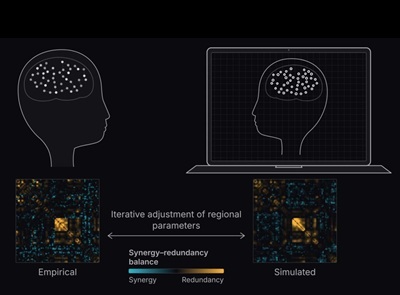
An international team has developed biophysical digital brain twins of 6,986 people to investigate the relationships between aging, neurodegenerative disease and the environment. Each brain was mapped using fMRI scans and then developed as a computer model of the underlying biological mechanisms.
The study, published in Nature Biomedical Engineering, provides personalized simulations of underlying dynamic brain mechanisms and will allow researchers to explore the processes related to disease, individual variations and environmental influences.
“Every brain ages in a different context. Our biophysical twins help us study how the variations in our biology and the social and environmental conditions of our lives relate to brain function,” said Agustín Ibáñez, the corresponding author of the study, who is Scientific Director of BrainLat at Universidad Adolfo Ibáñez.
Brain twins are personalized computer models that use biological equations to recreate aspects of brain activity. Here, researchers modeled 90 connected brain regions and adjusted each model until its virtual MRI signals closely matched the patterns in the participant’s resting-state recordings. This allowed the researchers to estimate underlying processes, such as the balance between excitation and inhibition, and consider what mechanisms might generate those signals.
The new models address a key difficulty in linking brain signals to biological processes. The twins estimate the level, variability and balance of neural activity. Model-derived regional excitability also correlated with grey matter volume, an independent measure that indicates the models are a good fit for real life.
The twins revealed patterns associated with age, sex and diagnosis. Age was most closely linked to how regularly or unpredictably simulated neural activity fluctuated over time. The differences between healthy participants and those with mild cognitive impairment, Alzheimer’s disease or frontotemporal degeneration involved several features together: activity levels, their variability, and the balance between signals that encourage or restrain neurons from firing. Frontotemporal degeneration showed the largest overall departure from the healthy pattern, rather than consistently higher or lower activity across the brain.
The environmental analysis identified associations in 7 of the 10 domains examined. The strongest involved sets of indicators related to democratic conditions (free choices, participation, political representation, rule of law), soil and water quality, and air pollution. The main results remained consistent after accounting for age, sex, diagnosis, country, MRI scanners and data quality.
A complementary analysis using individual social data also identified associations with healthcare access, childhood experiences, and financial circumstances. This allowed the team to examine environmental relationships using both contextual indicators and information about individuals’ own lives.
The platform provides a foundation for future studies to explore how brain dynamics change when conditions within a model are modified. Such experiments could help researchers prioritise mechanisms and choose between different interventions for further testing.
The long-term goal is to use these virtual laboratories to identify why a brain is vulnerable and which biological changes might restore healthier dynamics. The next step is to test whether the twins can anticipate changes observed in people over time or following an intervention.
Data from Trinity College Dublin