An HPLC detector is used to analyze the components of the eluted mixture that is collected after being run through an HPLC column. Differences in detector type are based on what is being detected. Detection can be done by measuring absorbance, changes in reflex indices, molecular weight, and fluorescence among others. When selecting a detector, it is important to consider the sample type being analyzed. Some sample types will not work or will have lower sensitivity on particular detectors. Also of consideration is the type of information that is being sought by the analysis and what method will be used when running the column, for example, some detectors will work with the gradient method while others will not.
Find, compare, and request a quote for HPLC detectors across leading suppliers at Labcompare; including access to product citations, related published figures, and first-hand reviews from our scientific community.
|  | 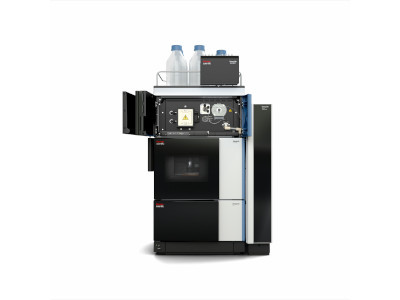 | 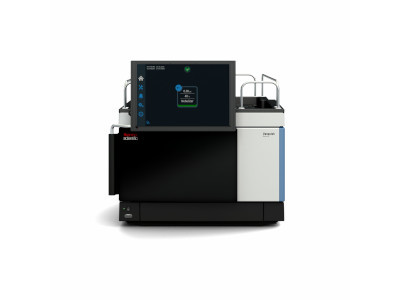 |
| Company | Thermo Fisher Scientific | Thermo Fisher Scientific | Thermo Fisher Scientific |
| Item | ISQ™ EC Single Quadrupole Mass Spectrometer | Thermo Scientific Vanquish Charged Aerosol Detector P Series | Thermo Scientific Vanquish Charged Aerosol Detector P Series Standalone Kit |
| Catalog Number | IQLAAAGADIFZZZMZZZ | VF-D20-A/
VH-D20-A | Vanquish Charged Aerosol Detector P Series Standalone Kit |
| Price | | | |
| Type | Seamless integration with IC or LC | Standard flow management | Standard flow management |
| Detector(s) | DynaMax XR detection system, with off-axis dynode, discrete dynode
electron multiplier and electrometer; Digital dynamic range = 107 | Inquire | Inquire |
| Description | Add mass spectrometry (MS) to your IC and LC analyses for access to the valuable data that only MS can provide. The new, easy-to-use Thermo Scientific™ ISQ™ EC Single Quadrupole Mass Spectrometer seamlessly integrates with ion chromatography (IC) and high performance liquid chromatography (HPLC) Add mass spectrometry (MS) to your IC and LC analyses for access to the valuable data that only MS can provide. The new, easy-to-use Thermo Scientific™ ISQ™ EC Single Quadrupole Mass Spectrometer seamlessly integrates with ion chromatography (IC) and high performance liquid chromatography (HPLC) systems.... Read More | Expand your detection range and get accurate quantitation in your High-Performance Liquid Chromatography (HPLC) analysis with the near-universal Charged Aerosol Detector (CAD). Featuring a wide linear and dynamic range along with a uniform response independent of chemical structure, Thermo Expand your detection range and get accurate quantitation in your High-Performance Liquid Chromatography (HPLC) analysis with the near-universal Charged Aerosol Detector (CAD). Featuring a wide linear and dynamic range along with a uniform response independent of chemical structure, Thermo Scientific™ Vanquish™ Charged Aerosol Detectors allow you to measure all non-volatile and many semi-volatile analytes at low-nanogram to sub-nanogram concentrations. Now, your lab can confidently and precisely quantify both low-level impurities and highly concentrated active compounds in a single analysis.... Read More | Expand your detection range and get accurate quantitation in your High-Performance Liquid Chromatography (HPLC) analysis with the near-universal Charged Aerosol Detector (CAD). Featuring a wide linear and dynamic range along with a uniform response independent of chemical structure, Thermo Expand your detection range and get accurate quantitation in your High-Performance Liquid Chromatography (HPLC) analysis with the near-universal Charged Aerosol Detector (CAD). Featuring a wide linear and dynamic range along with a uniform response independent of chemical structure, Thermo Scientific™ Vanquish™ Charged Aerosol Detectors allow you to measure all non-volatile and many semi-volatile analytes at low-nanogram to sub-nanogram concentrations. Now, your lab can confidently and precisely quantify both low-level impurities and highly concentrated active compounds in a single analysis.... Read More |
| Get Quote | | | |