An HPLC detector is used to analyze the components of the eluted mixture that is collected after being run through an HPLC column. Differences in detector type are based on what is being detected. Detection can be done by measuring absorbance, changes in reflex indices, molecular weight, and fluorescence among others. When selecting a detector, it is important to consider the sample type being analyzed. Some sample types will not work or will have lower sensitivity on particular detectors. Also of consideration is the type of information that is being sought by the analysis and what method will be used when running the column, for example, some detectors will work with the gradient method while others will not.
Find, compare, and request a quote for HPLC detectors across leading suppliers at Labcompare; including access to product citations, related published figures, and first-hand reviews from our scientific community.
|  | 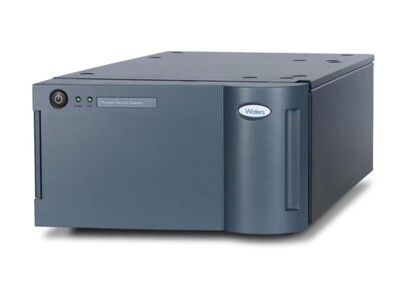 |  |
| Company | Waters | Wyatt Technology | Waters | Wyatt Technology | Waters | Wyatt Technology |
| Item | microDAWN™ Multi-Angle Light Scattering Instrument for UHP-SEC-MALS | Charged Aerosol Detector (CAD) | DAWN™ Multi-angle Light Scattering (MALS) Instrument |
| Citations | | | |
| Reviews | | | |
| Catalog Number | microDAWN | CAD | DAWN |
| Price | | | |
| Type | MALS and optional DLS | Inquire | MALS and optional DLS |
| Detector(s) | High-gain, high dynamic range, static light scattering detectors at 3 angles | Inquire | High-gain, high-dynamic-range photodiodes at 18 angles for MALS; optional avalanche photodiode that may be placed at any of four angles for DLS.
Fluorescence-blocking filters available for use with analytes that fluoresce when illuminated at the MALS wavelength. |
| Applications | With SEC/GPC: determination of distributions of absolute molar mass, size, conformation, conjugate ratio. | Inquire | With standard SEC/GPC or EclipseTM (FFF system): determination of distributions of molar mass, size, conformation, conjugation ratio and particle concentration.
With Calypso composition-gradient system: label-free characterization of biomolecular interactions including self- and hetero-association as well as non-specific interactions. |
| Description | The microDAWN™ MALS detector performs absolute characterization of macromolecules eluting from UHPLC (or UPLC), determining molar mass and size independently of retention time and molecular reference standards. This instrument offers superb sensitivity over a wide range of molar mass, size andThe microDAWN™ MALS detector performs absolute characterization of macromolecules eluting from UHPLC (or UPLC), determining molar mass and size independently of retention time and molecular reference standards. This instrument offers superb sensitivity over a wide range of molar mass, size and concentrations. In most respects, the microDAWN is similar to the well-established miniDAWN, a workhorse MALS instrument used in hundreds of labs around the world for characterizing proteins and other molecules smaller than 50 nm in radius. The microDAWN is uniquely suitable for use in conjunction with UHPLC Size Exclusion Chromatography (µSEC-MALS) thanks to its small interdetector dispersion and produces minimal band broadening in order to maintain the narrow peaks typical of UHPLC. In some cases it may be used with ion-exchange or other types of chromatography.... Read More | The Waters Charged Aerosol Detector (CAD) delivers reliable, near-universal detection that helps biopharmaceutical scientists quantify a wide variety of components involved in modern drug development. Its ability to provide a consistent response for molecules that lack strong UV absorbance makes it The Waters Charged Aerosol Detector (CAD) delivers reliable, near-universal detection that helps biopharmaceutical scientists quantify a wide variety of components involved in modern drug development. Its ability to provide a consistent response for molecules that lack strong UV absorbance makes it especially valuable when working with complex formulations, excipient mixtures, and process-related impurities. With robust performance and straightforward operation, the CAD supports confident decision-making from early analytical exploration through late-stage process control.
Key Features and Benefits:- Universal detection performance for compounds that are traditionally difficult to monitor with UV alone, including lipids, sugars, and surfactants.
- High sensitivity and low detection limits to strengthen impurity tracking and enhance characterization of challenging components.
- Broad dynamic range enabling simultaneous measurement of major constituents and trace-level species.
- Complementary to UV and mass detection, adding depth and flexibility to method development strategies.
- Fully compatible with Waters UPLC, UHPLC, and HPLC systems, with Empower™ Software that supports efficient, compliant data analysis across biopharma workflows.
... Read More | The DAWN™ instrument is an advanced detector for precise characterization of proteins, polymers, and nanoparticles including viral vectors, lipid nanoparticles and vesicles. Using multi-angle static light scattering (MALS) and optional dynamic light scattering (DLS), DAWN analyzes molar massThe DAWN™ instrument is an advanced detector for precise characterization of proteins, polymers, and nanoparticles including viral vectors, lipid nanoparticles and vesicles. Using multi-angle static light scattering (MALS) and optional dynamic light scattering (DLS), DAWN analyzes molar mass, size, conformation, particle concentration, conjugation (e.g. glycoproteins) or encapsulation (e.g. AAV capsid content). It stands out with exceptional sensitivity and the widest range of molecular weight, size, and concentration of any MALS instrument, paired with a broad selection of configurations and optional modules for enhanced capabilities.
The DAWN is most often used in conjunction with gel permeation chromatography (GPC-MALS), size exclusion chromatography (SEC-MALS) or an EclipseTM, field-flow fractionation instrument (FFF-MALS) and may also be used with ion-exchange chromatography or reverse-phase chromatography. The instrument includes a high-resolution, touch-screen front panel to display data graphs, system health and instrument diagnostics and is accompanied by ASTRA™, the most versatile software package available for analysis of online multi-angle and dynamic light scattering.... Read More |
| Wavelength Range | Inquire | Inquire | Inquire |
| Get Quote | | | |