A rotational rheometer, also known as a shear rheometer, is an instrument used to determine how a liquid or slurry flows. Rotational rheometers can measure viscosity, thixotropy, shear stress, and shear strain. Used is the plastics, petroleum, cosmetic, food, and pharmaceutical industries, rotational rheometers help to maintain parameters such as consistency and fluidity, which in turn allow predictions to be made about stability, texture, and shelf life. Rotational rheometers apply a known force to the sample and measure how it reacts to the force and the force the sample then exerts on the rheometer.
Features that can vary between rotational rheometers include viscosity ranges measured, whether or not there is a built in temperature probe, and the user friendliness of the controls and read out screen.
Discover and compare Rotational Rheometers:
|  |  |
| Company | Waters Corporation | Waters Corporation |
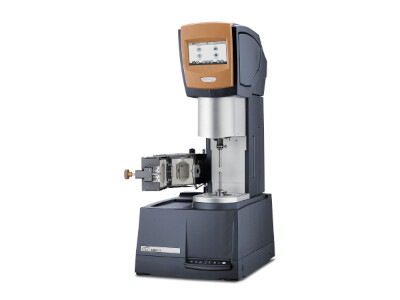
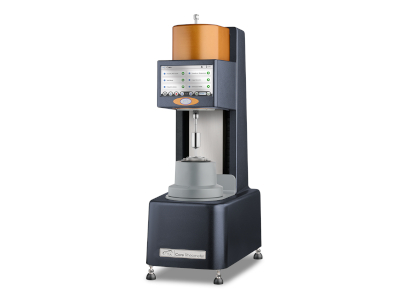
| Item | Waters TA Instruments™ ARES-G3™ Rheometer | Waters TA Instruments™ Discovery™ Core Rheometer |
| Catalog Number | ARES-G3 | Discovery Core |
| Price | | |
| Description | The advanced Waters TA Instruments ARES-G3 Rheometer pushes rheology further, delivering sharper data across more conditions. Building upon 55 years of rheology innovation, the ARES-G3 Rheometer’s cutting-edge technology and precision hardware capture real fluid behavior with fewer adjustments and The advanced Waters TA Instruments ARES-G3 Rheometer pushes rheology further, delivering sharper data across more conditions. Building upon 55 years of rheology innovation, the ARES-G3 Rheometer’s cutting-edge technology and precision hardware capture real fluid behavior with fewer adjustments and more accurate outcomes.
The ARES-G3 Rheometer features a modular design and high-performance core, offering a scalable platform that evolves with research and quality control needs.
-
Faster workflows can accelerate routine testing and data procession, helping improve lab efficiency
-
Expanded testing capabilities add support for solid material testing and advanced viscoelastic measurements
-
Enhanced data acquisition help capture more detailed, simultaneous data for deeper material insights
-
Advanced control features enable complex deformation profiles and waveform customization for cutting-edge research
... Read More | The Discovery™ Core Rheometer empowers every user to perform rheological measurements, guiding formulation development, optimizing performance and ensuring product quality. Whether you are new to rheology, upgrading your quality control testing, or expanding capabilities to meet growing demands, theThe Discovery™ Core Rheometer empowers every user to perform rheological measurements, guiding formulation development, optimizing performance and ensuring product quality. Whether you are new to rheology, upgrading your quality control testing, or expanding capabilities to meet growing demands, the Core Rheometer empowers your lab to discover insights into your materials’ behavior needed to advance your goals.
Discover Insights Beyond Viscosity
While viscometers report only a single viscosity value within a limited range, the Core Rheometer captures the complete viscosity profile, representing material behavior across all relevant conditions. Complex fluids like suspensions, emulsions, gels, pastes and slurries are non-Newtonian. Their viscosity changes with the applied shear rate and time; it is not a single value. Characterizing the full range of viscosity is critical to understand flow behavior under real-world conditions.
Rheometer Advantages: - Accuracy and precision
- Range of measurement
- Controlled shear rate
- Replicate process conditions
- Small sample volume
- Rapid temperature control
Test Modes: - Flow
- Oscillation
- Transient
Designed to Streamline Every Step:
Automatic gap control provides faster workflow and precise gap positioning. The axial motor automatically raises and lowers the head throughout the method and controls the test gap position with 0.1 um resolution for accurate and reproducible results.
Touchscreen capabilities go beyond basic controls, providing a new user experience ideal for high-throughput labs. Perform routine measurements directly at the instrument without need for PC interaction.
Integrated lighting enhances visibility for easier, more reproducible sample preparation leading to increased data accuracy and precision. The sample is automatically spotlighted during user interaction, guiding the operator and signaling test status.
Smart Swap™ 2 reader automatically identifies attached geometry, recalls dimensions and stored calibrations, and validates geometry aligns with the selected RheoGuide™ method. Smart Swap eliminates common sources of error and enables more efficient operation.
Compact design incorporates electronics, Peltier and air-cooling heat exchanger in one unit. Compared to modular systems with liquid circulators, the Core Rheometer requires up to 75% less bench space.... Read More |
| Torque Resolution | 1 nN.m | Inquire |
| Torque Range | 0.001 to 20 N | Minimum: 0.5 µN.m Maximum: 125 mN.m |
| Temperature Range | -150 °C to 600 °C (Forced Convection Oven, FCO),
-10 °C to 150 °C (Advanced Peltier System, APS) | Inquire |
| Frequency Range | 1 x 10⁻⁷ rad/s to 628 rad/s | Inquire |
| Get Quote | | |