Thermal analyzers are used to measure mechanical properties as a function of temperature or time. Numerous types of thermal analyzers are available such as simultaneous thermal analyzers, dynamic mechanical analyzers, thermogravimetric analyzers, thermomechanical analyzers, and many more. For a high throughput lab with a need for both thermogravimetric and calorimetric data, consider a simultaneous thermal analyzer as this can provide simultaneous data for both measurements under the same testing conditions. Many materials testing laboratories opt for dynamic mechanical analyzers for their ability to accurately analyze the mechanical and viscoelastic properties of various materials including polymers, thermoplastics, and metals. When comparing thermal analysis equipment some key considerations to keep in mind could be temperature precision, accuracy, and many other application-specific specifications. Thermal analyzers have a wide range of applications in materials testing, pharmaceutical testing, food testing, and many other applications.
|  |  |  |  |
| Company | NETZSCH-Gerätebau GmbH | NETZSCH-Gerätebau GmbH | NETZSCH-Gerätebau GmbH | NETZSCH-Gerätebau GmbH |
| Item | DMA 503 Eplexor® up to 500 N | DEA 288 Ionic Dielectric Analyzer | STA 2500 Regulus Simultaneous TGA-DTA Thermal Analyser | STA 319 Jupiter® Simultaneous Thermal Analyzer |
| Citations | | | | |
| Reviews | | | | |
| Catalog Number | DMA Eplexor HT / DMA Eplexor 500 / DMA 523 Eplexor | DEA 288 Ionic | STA 2500 Regulus | STA 319 |
| Price | | | | |
| Temperature Range | -160°C to 500°C (temperature range covered by two furnaces) | Inquire | RT to 1100 °C or RT to 1600 °C | 10°C to 1100°C |
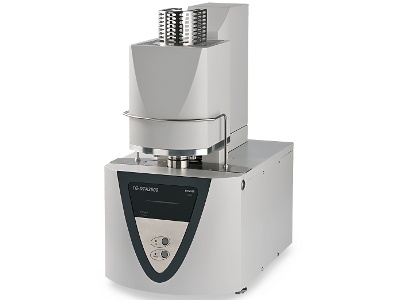
| Description | The testing instrument DMA 503 Eplexor® up to ±500 N enables the dynamic mechanical (or static) characterization of a wide range of different materials including elastomers and polymers, composites, metals, glasses, ceramics, biomaterials, foods, adhesives, and liquids.
The modular design of the The testing instrument DMA 503 Eplexor® up to ±500 N enables the dynamic mechanical (or static) characterization of a wide range of different materials including elastomers and polymers, composites, metals, glasses, ceramics, biomaterials, foods, adhesives, and liquids.
The modular design of the high-force DMA systems allows for measurements in the tension, compression, bending, and shearing modes. The testing machines in this series differ from each other mainly in terms of their maximum dynamic force ranges of ±100 N, ±150, N, and ±500 N.
Various add-on options make these testing machines a safe investment for the long term.
- Flexible and set for the future
... using a variety of forces and strain sensors as well as furnaces which allow for easy upgrades to the basic system at any time after the first installation.
- High force levels
...allowing for static loads up to 1500 N and dynamic loads up to ± 500 N; significant for investigations on curable resins, elastomers, composites, metals, glasses, or ceramics.
- Two independent drives
...featuring a servo motor for static and a shaker for dynamic loads.
- Interchangeable force sensors
...which can be easily changed out by the operator; nominal loads available ranging from ±10 N to ±2500 N.
- 24/7 operation via the Automatic Sample Changer
...for tension, compression, and bending samples across the entire temperature range around the clock.
- Optimized for temperature sweeps on large samples
...thanks to uniform heating of even large samples with low thermal conductivity (e.g., large rubber specimens).
- Highly economic LN2 cooling
...for low liquid nitrogen consumption.
Accessories
- Sample holders for a variety of applications
...from liquids via reinforced thermosets to metals and ceramics - all materials can be investigated with the DMA 503 Eplexor®.
- Humidity Generator (HYGROMATOR®)
...add-on investigates the water uptake of samples such as plastics and biopolymers. With the humidity generator, it is possible to create relative humidity values of between 5% and 95% in the temperature range between 5°C and 95°C.
- Immersion Bath
...even for measurements in the tension, compression, and bending mode; for the investigation of aging or plasticizer effects caused by contact with water or oil.
- Cooling options
...two different cooling systems are available including liquid nitrogen cooling to -160°C and air chiller to -60°C to use with the standard furnace.
... Read More | Opening a New World of Cure Monitoring
Customized Test Conditions
The multi-functional design of the DEA 288 Ionic allows for the application of a great variety of different test conditions such as heat, cold or UV light. This enables the user to easily and conveniently determine the best Opening a New World of Cure Monitoring
Customized Test Conditions
The multi-functional design of the DEA 288 Ionic allows for the application of a great variety of different test conditions such as heat, cold or UV light. This enables the user to easily and conveniently determine the best parameters for processing the material.
A complete dielectric analyzer consists of the DEA electronics and a sensor. Disposable sensors are connected via an adaptor box. Four models of DEA 288 Ionic are available: the regular laboratory version and the slim version with small footprint and two industrial versions.
Both instruments are equipped with the same state-of-the-art electronics and have the ability to control additional accessories such as the lab furnace or lab press. The technical differences between the devices are in the design of the housing, the footprint and the maximum number of channels.
Features:
- Frequency range: 1 mHz to 1 MHz, freely selectable values
-
Data acquisition multiple DEA modules: True simultaneous operation of all channels
-
Minimum data acquisition time: < 5 ms
-
Sensor connection: Shielded 4-wire technique (compensation of resistivity and capacity of the wire as a prerequisite for precise measurements)
-
DEA modules:
- Portable Version: All-purpose version, up to 7 channels
-
Industrial Rack Version: up to 8 channels (extension possible for up to 16 channels)
-
I/O Ports: Input and output of measuring signals or signals from peripheral devices such as pressure or temperature sensors. DEA allows for triggering by manufacturing machines
... Read More | A Highly Reliable and Fully Equipped Cost-Saving Instrument Package
The STA 2500 Regulus is a highly reliable and fully equipped top-loading differential balance ideal for standard STA measurements with frequently changing temperature programs available at an excellent price.
Excellent Cost A Highly Reliable and Fully Equipped Cost-Saving Instrument Package
The STA 2500 Regulus is a highly reliable and fully equipped top-loading differential balance ideal for standard STA measurements with frequently changing temperature programs available at an excellent price.
Excellent Cost Performance
The STA 2500 Regulus features a highly reliable, fully equipped instrument package for STA measurements up to 1600°C at an attractive price.
Top-Loading and Unique Differential Balance Arrangement
The natural gas flow in the top-loading system guarantees automatic protection of the balance against condensation and contamination. The tailor-made differential balance system cancels out buoyancy and convection influences over a broad temperature range. This provides easy operation without the need for timeconsuming baseline runs.
Various Atmospheres Available
Measurements can be performed in inert and oxidizing atmospheres but also under vacuum. The atmosphere can be dynamic or static. The built-in mass flow controllers (MFCs) are software-controlled and allow gas changes at any time during the test.
Ideal for Evolved Gas Analysis
The top-loading design of the STA allows for convenient coupling to gas analysis systems such as FT-IR (Fourier Transform Infrared) spectrometer, MS (mass spectrometer), or GC-MS (gas chromatograph – mass spectrometer). During thermal treatment, the gases evolved can be simultaneously analyzed.... Read More | The STA 319 Jupiter® is part of NETZSCH's Jupiter® range of STAs and offers several advantages:
- Temperature range of 10°C (RT) to 1025°C (or up to 1100°C): ideal for polymer, life science and inorganic measurements.
- Robust water-cooled ceramic furnace for fast heating and cooling.
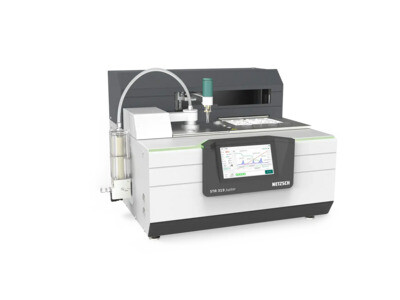
The STA 319 Jupiter® is part of NETZSCH's Jupiter® range of STAs and offers several advantages:
- Temperature range of 10°C (RT) to 1025°C (or up to 1100°C): ideal for polymer, life science and inorganic measurements.
- Robust water-cooled ceramic furnace for fast heating and cooling.
- Advanced top-loading microbalance: Provides an impressive 20-ng resolution for long-term, high-quality measurements.
- Revolutionary ring sample holder design: eliminates the need for a standard reference crucible. Enables quick setup and minimizes handling errors.
- Defined atmospheric conditions thanks to vacuum-tight design.
- Coupling to gas analysis enables real-time identification of the composition of evolved gases.
... Read More |
| Weight Range | Inquire | Inquire | ± 250 mg | Inquire |
| Measuring Range | Inquire | Inquire | ± 250 mg | Weight change up to 2000 mg |
| Get Quote | | | | |