New analyzer significantly increases customer profitability through reduced analysis time and increased instrument uptime
Houston, TX., USA – September 3, 2013 – PAC, a leading global provider of advanced analytical instruments for laboratories and online process applications, today released the AC Analytical Controls® Reformulyzer M4 (M4), which provides fast group type analysis of gasoline and gasoline blend streams using multi-dimensional gas chromatography.
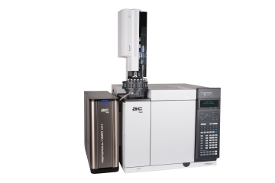
“We are proud to announce the release of our next generation product, Reformulyzer M4, the fastest and most versatile analyzer on the market, combining the analyses of Paraffins, Olefins, Naphthenes, Oxygenates, and Aromatics all in one instrument,” said David Tran, PAC Vice-President of Product Management and Marketing. “The M4 significantly reduces the total cost of ownership and increases the instrument uptime through the improved trap performance. Its quick and accurate analysis enables refineries to make timely decisions to keep their products on spec and optimize their operations. This same advantage allows independent labs to improve their capacity by almost doubling the number of samples they can process.”
Other group type analysis instruments can take 75 minutes to run. The M4 reduces this by approximately 50% to 39 minutes. In addition, because of improved durability, the M4 traps do not need to be replaced as often, which significantly decreases maintenance costs. This improvement, combined with the improved sample capacity, can reduce the total operational cost per sample by 50% when utilizing the M4 around 90%. Compliance with international standards is an absolute imperative in the hydrocarbon industry. Refineries and independent labs must follow strict procedures and methods to certify end products. The M4 is the worldwide accepted industry standard for EN ISO 22854, and also fully complies with ASTM D6839, ASTM D5443, IP 566, and SH/T 0741.”
AC Analytical Controls by PAC is the worldwide recognized leader in gasoline and gasoline blends testing with over 30 years of industry experience. AC introduced the first multi-dimensional gas chromatography instrument in 1981. Since the Reformulyzer Classic was introduced in 1992, there have been over 500 Reformulyzer installations. The Reformulyzer M4 continues to lead the industry and is the fifth generation analyzer.
About PAC
PAC is a leading global provider of advanced analytical instruments for laboratories and online process applications in industries such as refinery, petrochemical, biofuels, environmental, food & beverage, and pharmaceutical. To provide its customers with cutting edge technology, PAC leverages significant R&D resources to support its core technologies, including chromatography, elemental analysis, physical properties, and fuels composition. PAC’s product portfolio includes leading product lines with long histories of developing innovative instrumentation: AC Analytical Controls, Antek, Alcor, Cambridge Viscosity, PetroSpec, PSPI, ISL and Walter Herzog. For more information, visit www.paclp.com, or contact the company’s headquarters at 8824 Fallbrook Dr., Houston, Texas 77064, Tel. (U.S.) 800.444.TEST, or +281.940.1803.
Contact:
Jennifer Hicks
+1.281.940.1389
[email protected]