The GRINDOMIX Knife Mills are used for the rapid and reproducible size reduction and homogenization of dry as well as moist, oily or fatty sample materials. For samples containing volatile or degradable substances, grinding with dry ice is recommendable. Thus, the sample is embrittled and the volatile components, which are frequently the object of analysis, are preserved. Cooling the sample is, for example, part of the sample preparation process for pesticide residue analysis according to the QuEChERS method which is practiced in many food laboratories. The GRINDOMIX knife mills are used in food labs worldwide for sample homogenization.
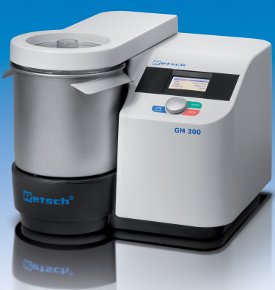
To optimize processing under dry ice, or after previous external cooling of the sample with liquid nitrogen, RETSCH offers special accessories for cryogenic applications. A full metal knife of stainless steel, a grinding container of stainless steel and a special lid for dry ice applications, containing a small aperture for the escape of overpressure, are the perfect combination for cryogenic sample preparation.
The GRINDOMIX GM 300 is ideally suited to process up to 4500 ml sample material and provides representative grinding results within seconds. A wide selection of accessories makes the GM 300 a versatile tool for sample homogenization. To grind smaller sample volumes up to 700 ml, RETSCH offers the GRINDOMIX GM 200 which can also be used for dry ice applications.
Retsch is the leading solution provider for neutral-to-analysis sample preparation and characterization of solids. On the basis of more than 90 years of experience RETSCH develops innovative size reduction and sieving equipment which is characterized by excellent performance, operating convenience, safety and a long lifetime.