Acquire Brilliant Fluorescence Images at Ultra-high Speed
Wetzlar, Germany. To successfully document live cells and rapidly fading fluorescence specimens, a camera technology particularly designed for the purpose is indispensable. The new Leica DFC365 FX digital microscope camera from Leica Microsystems combines exceptional image quality with very high temporal resolution for rapid time-lapse recordings. The Leica DFC365 FX is setting new standards in its class enabling researchers to work efficiently, even with weakly fluorescing specimens. Equipped with a highly sensitive CCD sensor (pixel size 6.45 µm) and active Peltier cooling, it is ideal for a wide range of applications – from basic fluorescence documentation to demanding experiments such as TIRF, FRET or structured illumination.
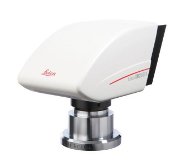
The Leica DFC365 FX digital microscope camera provides fast, brilliant live cell images, even with weakly fluorescing specimens. The print-ready image can be requested from: [email protected]
The Leica DFC365 FX achieves hitherto unattainable acquisition rates of 21 fps at full resolution. In "Overlapping Mode“, an image can be captured while the previous image is still being read out. Data are transferred rapidly to the PC via a FireWire-B interface. Besides high-speed image acquisition at 40 MHz, the pixel clocking rate of the sensor can also be set to 20 MHz or 1.6 MHz as required. This yields brilliant fluorescence images with a superb signal-to-noise ratio.
The optional NIR (Near Infra-Red) Mode extends the operating range of the camera for fluorescence markers emitting in the wavelength range above 700 nm, which are difficult to capture with conventional CCD technology.
Leica Microsystems is a world leader in microscopes and scientific instruments. Founded as a family business in the nineteenth century, the company’s history was marked by unparalleled innovation on its way to becoming a global enterprise.
Its historically close cooperation with the scientific community is the key to Leica Microsystems’ tradition of innovation, which draws on users’ ideas and creates solutions tailored to their requirements. At the global level, Leica Microsystems is organized in four divisions, all of which are among the leaders in their respective fields: the Life Science Division, Industry Division, Biosystems Division and Medical Division.
Leica Microsystems’ Biosystems Division, also known as Leica Biosystems, offers histopathology laboratories the most extensive product range with appropriate products for each work step in histology and for a high level of productivity in the working processes of the entire laboratory.
The company is represented in over 100 countries with 12 manufacturing facilities in 7 countries, sales and service organizations in 19 countries and an international network of dealers. The company is headquartered in Wetzlar, Germany.