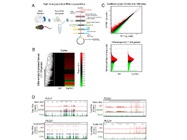
Scientists at the Korea Brain Research Institute (KBRI), led by Dr. Jae-Yeol Joo, have found new cryptic splice variants and SNVs in the PLCg1 gene of AD-specific models using Splice-AI. The hidden splicing was discovered within the transcriptome to AD models via deep learning-based Splice-AI. Their research was published in PNAS.
All 14 alternative splicing sites in the PLCg1 gene body were established through deep learning, demonstrating a remarkably powerful technique for future genomic analysis. The researchers revealed for the first time that SNV leads to changes in amino acids of proteins at exon 27, a region involved in homeostasis.
Dr. Joo stated, "Emerging variants of the coronavirus have been reported in England in December 2020, and that is more transmissible than previously circulating viruses. This variant coronavirus has mutations and altered their spike protein amino acid. Our research will give valuable information and technique for various human diseases and through the convergence and utilization of brain research with AI technology, which is the core of the Fourth Industrial Revolution, to understand various diseases including AD. We will be able to obtain critical information for diagnosis and treatment strategy."
Image credit: KBRI