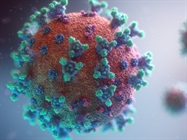
Since the pandemic began, SARS-CoV-2 has mutated several times. New variants have popped up all over the world. Variant B.1.1.7 in the United Kingdom, B.1.351 in South Africa and P.1 in Brazil have all mutated from the original viral strain. The mutations have been observed on the spike protein, the structure that enables the virus to enter host cells.
This spike protein is also the major target of the immune response. Antibodies generated in response to SARS-CoV-2 infection or vaccination bind to the spike protein, inhibiting the virus. A team led by Markus Hoffmann and Stefan Pöhlmann, of the German Primate Center Leibniz Institute for Primate Research, and Jan Münch, of the Ulm University Medical Centre, have found that the SARS-CoV-2 variants B.1.351 and P.1 are no longer inhibited by an antibody used for COVID-19 therapy. Their research has been published in Cell.
Additionally, they have noted that these variants are less efficiently inhibited by antibodies from recovered patients and vaccinated individuals. This suggests that convalescence from COVID-19 as well as vaccination may offer incomplete protection against these mutant viruses.
Jan Münch commented, "We found that certain antiviral agents that block host cell entry and are in preclinical development inhibit the mutant viruses just as well as the original virus. Variant B1.1.7, which is currently spreading rapidly in Germany, was also efficiently inhibited by antibodies, including antibodies induced by vaccination. In contrast, an antibody used for COVID-19 therapy did not inhibit variants B.1.351 and P.1. Moreover, these variants were less well inhibited by antibodies from convalescent or vaccinated individuals, they partially bypassed the neutralizing effect of the antibodies."