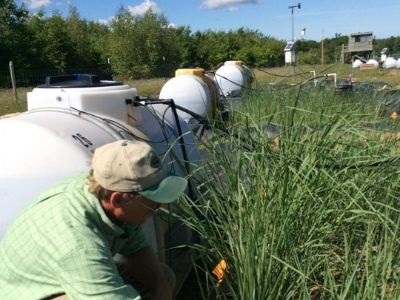
A new study, led by the University of York, demonstrates that genetically modified switchgrass (Panicum virgatum) can detoxify residues of the military explosive, RDX, left behind on live-fire training ranges, munitions dumps and minefields.
Researchers generated the plants by inserting two genes from bacteria able to breakdown RDX. The plants were then grown in RDX contaminated soil on a US military site. The genetically modified grass grew well and successfully degraded RDX to non-detectable levels in their plant tissues.
The study confirmed that the plants were able remove and degrade RDX at a rate of 27 kg RDX per hectare. RDX is designated as a priority pollutant by the US Environmental Protection Agency and is of significant and increasing public concern. In the US, over 10 million hectares of military land are contaminated with munitions components, of which, RDX is a major component.
“The removal of the toxic RDX from training ranges is logistically challenging and there is currently a lack of cost-effective and sustainable solutions,” said Liz Rylott, study author and researcher at the Centre for Novel Agricultural Products (UK). "Our research demonstrates how the expression, in switchgrass, of two bacterial genes that have evolved specifically to degrade RDX give the plants the ability to remove and metabolize RDX in the field at concentrations relevant to live fire military ranges.”
The researchers say the continuing demand for vast amounts of military explosives means that RDX will continue to be manufactured and used globally on a massive scale for the foreseeable future.
Photo: Researchers sampling the switchgrass. Credit: Neil Bruce
Subscribe to our e-Newsletters
Stay up to date with the latest news, articles, and products for the lab. Plus, get special offers
from Labcompare – all delivered right to your inbox! Sign up now!