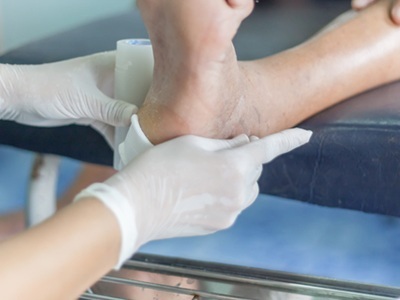
In a first-in-human study, an experimental cell therapy was well tolerated in 10 people with chronic diabetic foot ulcers. All 10 participants experienced complete wound closure within six months, and tests indicated improved sensation in the treated feet during the 12-month follow-up period.
The study enrolled 10 adults living in Nicaragua, ages 40 to 74, whose diabetic foot ulcers had remained open for at least three months despite receiving the local standard of care. The ulcers ranged in size from 10 to 100 cm², representing substantial diabetic foot wounds.
Participants received a single treatment containing 30 million, 40 million or 60 million investigational cells. The cells were injected into and around the wound and into nearby soft tissue in the foot and ankle. Four participants received the lowest dose, three received the middle dose and three received the highest dose.
They were then monitored in the hospital following treatment and contacted weekly for the first three weeks, then evaluated at one, three, six and 12 months to assess safety, wound healing, sensation and blood flow in the foot and ankle.
The study results show all 10 participants’ wounds closed by the 6-month mark. Tests also showed improvements in the participants’ ability to feel light touch and vibration in the treated foot. By 12 months, all but one participant had regained what researchers classified as normal protective sensation—the ability to feel enough discomfort or pressure to help recognize a potential injury.
The researchers, however, did not find a clear overall improvement in blood flow. Although seven blood vessels changed from having no measurable flow at the beginning of the study to measurable flow after 12 months, results across participants included both increases and decreases.
The wound closure and improvements in sensation observed in this first-in-human study provide encouraging support for continued investigation of placental stem cell therapies. A larger, controlled study could help researchers better understand the therapy’s contribution to wound healing and sensation, as well as determine the most appropriate dose.
Data from Wake Forest University School of Medicine