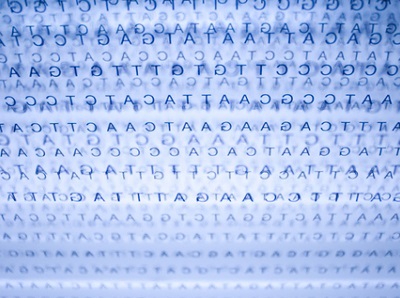
Researchers from North Carolina State University have turned a longstanding challenge in DNA data storage into a tool, using it to offer users previews of stored data files—such as thumbnail versions of image files. Until now, it wasn't possible to preview the data in a file stored as DNA—if you wanted to know what a file was, you had to "open" the entire file.
Users "name" their data files by attaching sequences of DNA called primer-binding sequences to the ends of DNA strands that are storing information. To identify and extract a given file, most systems use polymerase chain reaction (PCR). Specifically, they use a small DNA primer that matches the corresponding primer-binding sequence to identify the DNA strands containing the file you want. The system then uses PCR to make lots of copies of the relevant DNA strands, then sequences the entire sample. Because the process makes numerous copies of the targeted DNA strands, the signal of the targeted strands is stronger than the rest of the sample, making it possible to identify the targeted DNA sequence and read the file.
Specifically, the researchers developed a technique that makes use of similar file names to let them open either an entire file or a specific subset of that file. This works by using a specific naming convention when naming a file and a given subset of the file. They can choose whether to open the entire file, or just the "preview" version, by manipulating several parameters of the PCR process: the temperature, the concentration of DNA in the sample, and the types and concentrations of reagents in the sample.
"Our technique makes the system more complex," says James Tuck, co-corresponding author of the paper and a professor of computer engineering at NC State. "This means that we have to be even more careful in managing both the file-naming conventions and the conditions of PCR. However, this makes the system both more data-efficient and substantially more user friendly."
Subscribe to our e-Newsletters!
Stay up to date with the latest news, articles, and events. Plus, get special offers from Labcompare – all delivered right to your inbox!
Sign up now!