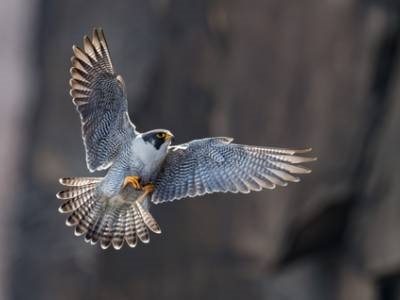
Persistent organic pollutants (POPs) such as polychlorinated biphenyls (PCBs) and organochlorine pesticides like DDT and chlordane are often monitored in animal populations to gauge their ecological impact. However, several unmonitored contaminants, including chemical synthesis byproducts, may still be harmful and persist throughout the food chain. Researchers at Ehime University conducted a comprehensive nontarget screening of unmonitored organohalogen compounds (OHCs) in wild birds of prey in Osaka, Japan and identified bioaccumulation of several pesticide byproducts in the animals’ livers, including contaminants that have never been reported before in wild animals.
The team utilized two-dimensional gas chromatography (GCxGC) and time-of-flight mass spectrometry (ToF MS) with mass spectral filtering software to profile the unmonitored chlorinated and brominated compounds in liver samples from species including the peregrine falcon, sparrow hawk, black kite and gray heron. The nontargeted analysis identified a large number of unmonitored OHCs in terrestrial and brackish water birds, including polychlorinated terphenyls (PCTs), halogenated natural products (HNPs), and DDT and chlordane byproducts, Some contaminants were found to be bioaccumulated at relatively high levels; additionally, chlordane-related compounds with C15-based structures were detected for the first time in wild animals, and showed a high biomagnification potential in the terrestrial food web. This research was published in Environmental Science & Technology.
The study was part of a larger effort known as ChemTHEATRE, which aims to build a digital archive of comprehensive chemical screening data and create a chemical monitoring repository for environmental and biological specimens. This latest study demonstrates the need for further analysis of unmonitored OHCs and their impact on wildlife.