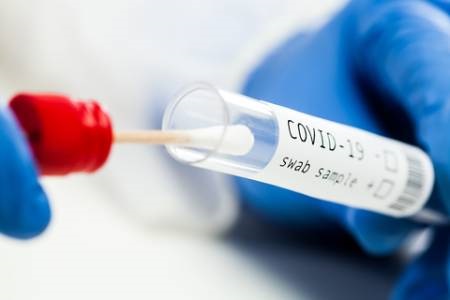
The gold standard for COVID-19 testing is qRT-PCR, which provides excellent sensitivity but takes hours to yield results. This method for SARS-CoV-2 RNA detection also requires the use of enzymes that are not widely available in some areas due supply chain disruptions, cost or lack of resources for proper storage and transportation of these biological products. A research team from the Technical University of Denmark has now proposed an enzyme-free method for low-cost, rapid SARS-CoV-2 RNA detection based on toehold-mediated strand displacement (TMSD) for isothermal amplification.
The assay created by the team, called the non-enzymatic isothermal strand displacement and amplification assay (NISDA), does not involve thermal cycling and only requires the sample and reaction mixture to be added together and incubated at 42°C for 30 minutes. After this step, the positive samples are detected through fluorescence measurement. The team tested the assay in collaboration with Hvidovre Hospital and Bispebjerg Hospital and found that the method showed 100% specificity and up to 100% sensitivity when used on-site at the hospital. The study was published in Nature Communications.
“We exploited the TMSD approach and designed three DNA probes. One probe exchanged the whole genome to a short DNA strand. The other two probes utilized the exchanged short DNA to trigger a fluorescence signal amplification cascade reaction,” explained corresponding author Yi Sun. “The beauty of the NISDA assay is its simplicity. We removed the usage of enzymes to reduce the assay cost and enhance its robustness at room temperature.”
The researchers said the NISDA method could be adapted to detect pathogens other than SARS-CoV-2, and could also be developed into a point-of-care diagnostic device. The method can also be designed for short RNA targets such as cancer biomarker microRNA, said Sun.