SARS-CoV-2 can spread easily through airborne respiratory droplets, making mask-wearing and social distancing important for preventing transmission. Knowing when the virus might be present in the air at an indoor location, such as a hospital or nursing home, can help determine infection risks, identify potential hotspots and better protect staff and patients at these facilities. Methods such as wastewater testing and swabbing of surfaces have been used for environmental SARS-CoV-2 testing, but wastewater only provides a retrospective view while surface sampling may not capture enough of the virus to reliably detect its presence in an indoor space. Researchers at the Nanyang Technological University (NTU Singapore), the Singapore Centre for Environmental Life Sciences Engineering (SCELSE) and the National University of Singapore (NUS) Yong Loo Lin School of Medicine have now developed a tailored RNA extraction workflow to detect SARS-CoV-2 directly from the air.
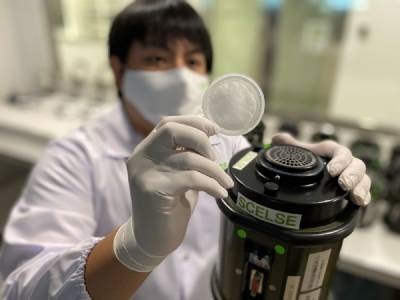
The researchers tested air sampling devices of different flow rates in more than two dozen locations at hospital wards where COVID-19 patients were being treated. The wards included a naturally ventilated, open-cohort ward and a mechanically ventilated isolation ward, and 50 L/min and 150 L/min sampling flow rates were tested. The air samplers were deployed for eight-hour periods and the team also collected surface swabs in the same locations for comparison. For the swabs, the researchers performed a traditional kit-based RNA extraction protocol, but for the air samples, the team modified a protocol typically used for water samples to fit an ultra-low biomass analysis workflow.
After testing all of the samples via RT-qPCR, the researchers found that the higher flow rate sampler yielded the best results, and that the virus was detected in 72% of the air samples compared with a 9.6% detection rate from surface swabs. The study highlighted the potential for indoor air sampling to serve as a powerful tool for SARS-CoV-2 surveillance, the researchers said. This research was published in the journal Indoor Air.
“This study demonstrated the versatility and sensitivity of air sampling for monitoring SARS-CoV-2 in hospital settings, something that was previously not thought possible due to the high ventilation rate of hospital wards,” said study co-lead author Irvan Luhung. “Such an air surveillance capability could make a valuable contribution towards keeping frontline medical staff safe in this pandemic. In hospitals with a high daily number of COVID-19 patients, employing a routine air surveillance programme with high sensitivity could be beneficial in detecting the virus early and help to keep frontline medical staff safe.”
Further testing could be performed in other indoor settings, such as areas where mass gatherings occur, in order to assess the risk to different populations and allow intervention before a larger outbreak.
Photo: Dr. Irvan Luhung, senior research fellow from SCELSE at NTU, with the air sampling devices used for the study. Credit: SCELSE