The revolutionary development of the mRNA-based COVID-19 vaccines has highlighted both the benefits and challenges associated with mRNA-based pharmaceuticals. One of these challenges is the need for ultra-low temperatures to prevent mRNA degradation. A recently-awarded four-year, $2 million grant from the National Science Foundation’s Emerging Frontiers in Research and Innovation program will now enable an multi-institutional team of researchers to build a new manufacturing platform that allows thermostable mRA sequences to be produced on demand and on-site.
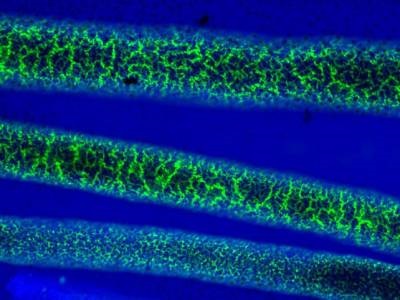
The project, referred to as Distributed Ribonucleic Acid Manufacturing (DReAM), will be led by Daeyeon Lee of the University of Pennsylvania and will include collaborations between researchers from the University of Oklahoma, Drexel University and the University of Colorado Boulder. The team will investigate the potential use of bicontinuous interfacially jammed emulsion gels, or bijels, in mRNA manufacturing. Bijels are composed of a structured emulsion of oil and water separated by a layer of nanoparticles that prevents the oil and water from forming isolated droplets. This arrangement can allow for continuous chemical reactions and isolation of products, with reactant molecules fed into one phase and products extracted from the other.
The use of bijels to continuously synthesize and isolate mRNA could both speed up production and improve thermostability by enabling isolation in the oil phase. This could prevent the degradation that can occur when mRNA is isolated in water, and remove the need for cryogenic storage and the “cold chain” between manufacturers and patients.
“The mRNA molecules are very fragile and require extremely low temperatures for storage and transportation. The DReAM team is working to avoid the need to maintain cryogenic temperatures,” said Dimitrios Papavassiliou, a University of Oklahoma professor and collaborator on the project. “We hope our work will revolutionize care for viruses such as HIV, various cancers and genetic disorders - but to achieve this we must produce cheaper therapeutics and solve the temperature challenge.”
The DReAM technology could not only increase access to mRNA-based pharmaceuticals by lowering costs and simplifying storage and transport, but could also enable on-site production of medicines in a wide range of settings, such as in disaster recovery scenarios, national defense missions and even in space exploration. Additionally, accelerated production of mRNA-asked therapeutics could have economic benefits, including employment opportunities.
Photo: Bijels could be used to continously manufacture mRNA and provide thermostability by isolating products in the oil phase. Credit: Penn Engineering Today