Research has shown that comfortable, stimulating environments can have a positive impact on our brains, contributing to positive childhood development and even recovery from conditions such as stroke. The mechanism behind this positive response to environmental enrichment had not, however, been fully elucidated down to the molecular level. Now, a research team from the University of Vienna has uncovered some of the molecular activity that underlies this phenomenon using a comprehensive multiomics workflow and state-of-the-art mass spectrometry (MS) tools.
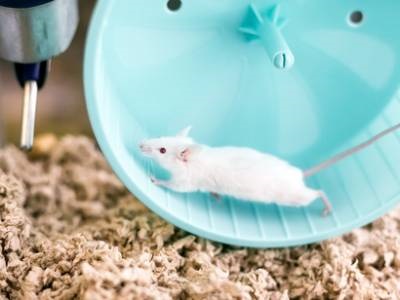
For this study, the researchers provided mice with enriched environments that included lots of space and toys such as a running wheel and ropes. After six weeks, the researchers followed their developed multiomics extraction and analysis workflow for an in-depth look into the lipid metabolism at synaptic junctions in the mouse hippocampus, included quantification of proteins through nano liquid chromatography-mass spectrometry (nanoLC-MS) and shotgun lipidomics using tandem mass spectrometry (MS/MS). Targeted analysis of sphingolipids, endocannabinoids, phosphoinositides (PIPs) and gangliosides were also performed through LC-MS using C18 or ion exchange columns. Finally, transmission electron microscopy (TEM) was used to study synaptic structure and better put the findings into context.
The researchers found that 178 proteins and 20 lipids were significantly regulated depending on whether the mice spent time in the enriched environment versus a normal IVC cage. Endocannabinoid metabolism was especially influenced by the enriched environment, with reduced endocannabinoid signaling in the mice being linked to increased surface expression of AMPA receptors and enhanced synaptic plasticity. This research was published in Cell Reports.
“80 percent of the brain cells are only supporting cells. We have therefore focused on the synapses as central sites of signal transmission and isolated them,” neuroscientist and coauthor Michael Kreutz said of the team’s extraction workflow.
The multiomics workflow was also used to construct a lipid inventory and network map of lipid metabolism in the rodent forebrain. This comprehensive analysis offers a more complete understanding of how this network regulates the functioning of synapses and can advance further study on the positive effects of enriched environments on brain development and recovery.