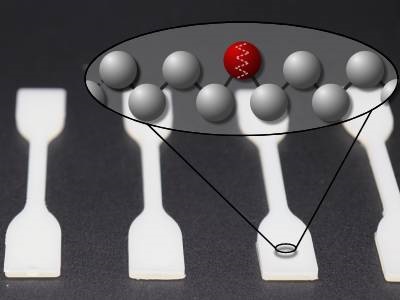
Polyethylene is the most common type of plastic in the world, with many desirable properties such as being durable, lightweight and water-repellent. However, the persistence of plastics like polyethylene in the environment is a major concern, leading chemists to search for ways to make polyethylene more degradable while retaining or improving its useful qualities. A research team from the Department of Chemistry at the University of Konstanz has now found a way to produce photodegradable polyethylene while also expanding its properties using a nickel catalyst and low concentration of carbon monoxide (CO).
The researchers sought to add a small amount of polar groups to the polyethylene material during synthesis in order to reduce its environmental persistence and impart additional properties such as improved adhesion to metal surfaces. However, most catalysts conventionally used in polyethylene synthesis are destroyed by polar reagents, making this incorporation a difficult task. The researchers tested the ability of phosphinophenolate-coordinated nickel complexes to catalyze the polymerization of ethylene with 1% CO used as a reagent for producing polar keto groups.
The team found that this combination resulted in the successful incorporation of a low density of keto groups, imparting new properties while maintaining the material’s durability. After processing the material through conventional injection molding techniques, the researchers found the new polyethylene had similar tensile properties to standard high-density polyethylene while also being degradable under exposure to UV radiation. This study was published in Science.
“Science and technology have long sought after a method to incorporate such groups in polyethylene chains. Our current achievement now opens up new perspectives,” said study coauthor Stefan Mecking. “This material provides a new approach for developing non-persistent polyethylenes. Further studies are definitely required, in order to also understand long-term performance.”
Photo: Test specimens of novel polyethylene, which contain predetermined breaking points in the molecular chains. Credit: Maximilian Baur, AG Mecking, Universität Konstanz