Rare earth elements are used in a wide range of modern technologies including cell phones, computers, electric vehicles, LEDs, rechargeable batteries and radar systems. Current methods for extracting these elements can have a negative impact on the environment, however, as they require high temperatures, high pressures and harsh chemicals, and produce a large amount of toxic waste. Researchers at Cornell University are seeking a more sustainable way to obtain these important materials by engineering bacteria to dissolve rock and extract the elements.
The bacteria Gluconobacter oxydans produces an acid called biolixiviant, which is how it is able to dissolve the rocks containing rare earth elements. In order to determine which genes in the G. oxydans genome impacted biolixiviant production, the researchers used a technology they developed called Knockout Suduko, which allowed them to disable 2,733 individual genes one by one. By studying how the disruption of each gene affected the bacteria’s extraction abilities, the research team identified a total of 304 genes that play a role in extraction.
The results showed that disabling certain genes would nearly eliminate the bacteria’s bioleaching ability, while disabling other genes, such as phosphate-specific transport system genes, enhanced bioleaching by up to 18%. Genetically engineering the bacteria to optimize extraction performance could present an effective and more environmentally friendly way to obtain rare earth elements without the use of high heat, pressure and toxic byproducts. This study was published in Nature Communications.
“I am incredibly optimistic. We have a process here that is going to be more efficient than anything that was done before,” said study co-author Esteban Gazel.
The researchers’ work provides a comprehensive roadmap for genetically modifying G. oxydans in order to increase its bioleaching efficiency, setting the stage for further work that could optimize bacteria-based rare earth element extraction methods.
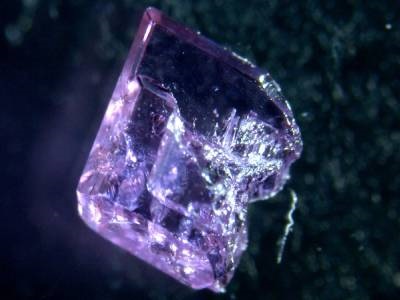
Photo: A lab-grown crystal of a synthetic form of the rare earth mineral monazite shows extensive damage to one face after exposure to a bioleaching compound generated by G. oxydans. Credit: Brian Balta