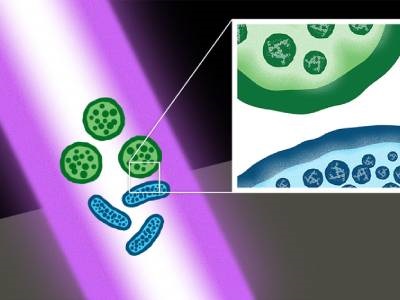
Many pathogenic bacteria species have developed resistance to antibiotics, transforming them into deadly superbugs that are extremely difficult to combat. The threat of multidrug-resistant bacteria has led scientists to search for an alternative method of killing the pathogens and their spores without causing damage to human cells. Researchers at the Washington University School of Medicine have now developed a new antibacterial tool that is both safe for humans and effective against drug-resistant bacteria, in the form of an ultrashort-pulse laser system.
The ultrashort-pulse visible laser can deactivate bacteria through excitation of their protein structures, which causes their molecular bonds to break and disrupts normal protein function within the microorganisms. The researchers were able to identify a “therapeutic window” within which the laser’s power is strong enough to inactivate viruses and bacteria but not too strong that it harms human cells, said first author Shaw-Wei Tsen.
Testing the lasers on the multidrug-resistant Staphylococcus aureus (MRSA), extended spectrum beta-lactamase-producing Escherichia coli (E. coli) and spores of Bacillus cereus, the researchers found that in all cases the lasers killed more than 99% of the targeted organisms, reducing their numbers by more than 1,000 times. Unlike methods based on heat, radiation and chemicals such as bleach, the lasers do not do damage to human tissue or biological products, making them a viable option for sterilizing wounds, surgical incisions and blood products. This research was published in the journal Cells.
“Anything derived from human or animal sources could be contaminated with pathogens. We screen all blood products before transfusing them to patients. The problem is that we have to know what we’re screening for,” said Tsen. “If a new blood-borne virus emerges, like HIV did in the ‘70s and ‘80s, it could get into the blood supply before we know it. Ultrashort-pulse lasers could be a way to make sure that our blood supply is clear of pathogens both known and unknown.”
Photo: Researchers at Washington University School of Medicine in St. Louis have found that multidrug-resistant bacteria and bacterial spores can be killed by ultrashort-pulse lasers. The findings could lead to new ways to sterilize wounds and blood products without damaging human cells. Credit: Michael Worful