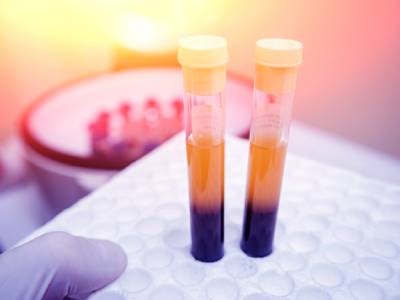
Platelet-rich plasma (PRP) is part of the body’s natural healing system, helping to stop bleeding and promote the generation of new tissue and blood vessels. However, this natural process has its limitations when dealing with severe wounds, which can lead to a slow recovery process and excessive scarring. Researchers at the RCSI University of Medicine and Health Sciences have proposed a new method for speeding up the healing process and reducing scarring using a 3D-printed biomaterial made from a patient’s own platelet-rich plasma.
The researchers combined PRP with gelatin methacrylate (GelMA) to form a new bioink that can be printed into a 3D scaffold. The PRP within the bioink, which acts as a source of angiogenic growth factors, combined with the tailored architecture of the printed material, can help promote skin healing when administered as an implant.
The researchers found that the implant had the potential to both enable efficient vascularization and inhibit fibrosis when tested via tubulogenesis assays and in vivo experiments on chick chorioallantoic membranes, performing better than scaffolds made from GelMA alone. In a patient, this implant could be delivered in a single surgical procedure in order to help treat severe wounds that would otherwise be difficult to heal. This study was published in Advanced Functional Materials.
“As well as promising results for skin wound healing, this technology can potentially be used to regenerate different tissues, therefore dramatically influencing the ever-growing regenerative medicine, 3D printing and personalised medicine markets,” said Fergal O’Brien, corresponding author on the study.