Single-cell RNA sequencing (scRNA-seq) provides thorough information about individual cell states and phenotypes, offering insights into the heterogeneity of cell populations and even identifying rare or previously unknown cell types. While an invaluable tool in life science research and biomedical applications, conventional scRNA-seq methods still have some limitations, such as the need for a large cell input (>1000 cells). Researchers at the Ecole Polytechnique Fédérale de Lausanne (EPFL) have now proposed a new scRNA-seq technique that boosts efficiency and lowers required cell input through precise cell detection, capture and sorting methods.
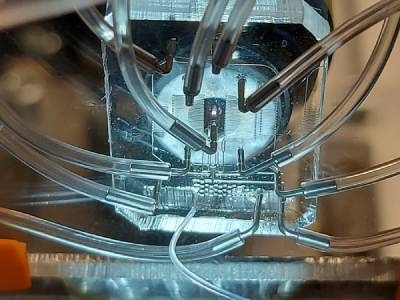
The new system, called the deterministic mRNA-capture bead and cell co-encapsulation dropleting system (DisCo), leverages machine vision and multilayer microfluidics to enable scRNA-seq of single-cell suspensions with fewer than 500 cells. Unlike passive cell capture methods, DisCo uses machine vision to actively detect cells and capture them in droplets of oil and beads. The system features precise particle and cell positioning, with droplet sorting carefully controlled via the machine vision and microfluidics setup. This results in a high capture efficiency of over 70% and also allows continuous operation at speeds of up to 350 cells per hour.
EPFL researchers demonstrated the system’s capabilities by using DisCo to analyze small tissue samples including the chemosensory organs of the Drosophila fruit fly, individual mouse intestinal crypts and 31 individual intestinal organoids. The analyses of the organoids at different developmental stages revealed new insights into their heterogeneity, including the identification of various distinct organoid subtypes, some of which had never been identified before. This research was published in Nature Methods.
“Our work demonstrates the unique ability of DisCo to provide high-resolution snapshots of cellular heterogeneity in small, individual tissues,” said corresponding author Bart Deplancke.
The research group says the new system makes scaling and serial processing of low-input cell samples highly cost efficient. Researcher Johannes Bues adds that accommodating small samples removes the need to load bulk samples, which can lead to confounded mosaic cell population read-outs.
Photo: Close-up of the microfluidics enabling deterministic co-encapsulation of single cells at high efficiencies. Credit: Jörn Pezoldt (EPFL)