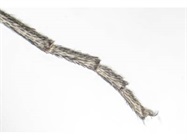
Engineers often look to nature to discover unique patterns that could improve the function of materials used in construction and other applications. Since the discovery of the biological helical structure motif in 1972, a total of eight categories of bio-inspired design motifs have been incorporated into materials design, also including layered, overlapping and suture patterns. Now, a new segmental pattern inspired by the exoskeleton of arthropods has been demonstrated to improve load-bearing capacity and energy absorption, and could potentially help reduce consumption of materials like cement by increasing damage tolerance in building materials.
Researchers and engineers from Monash University, The University of Queensland and The University of Manchester based their design on asymmetrically rotating joints in exoskeletons, such as those seen in the legs of fleas, scorpions and centipedes. In nature, these segmental structures provide greater load-bearing capacity and energy absorption as the animals walk and jump. The research team replicated this biological design by fabricating lightweight composite structures consisting of 3D-printed polymer scaffolds and hard cement coatings. These included a structure with six supporting legs, resembling a bug, and a honeycomb assembly, both including the segmented structure in their design. The structures underwent compression testing and damage progression was examined in real time using X-ray micro-CT imaging.
Mechanical testing showed that the bug-shaped structure could easily sustain a load of up to 10,000 times its own weight, the authors wrote. The researchers also found that the segmented structure resulted in a unique progressive failure pattern that preserved material integrity with 60-80% of load-bearing capacity at greater than 50% of compressive strain. Compared to cellular foam concrete, the lightweight segmented honeycomb structure was found to be twice as strong and had a material utilization rate of 79% compared to 59% for the foam concrete. According to the team’s calculations, the segmental design motif also has the potential to achieve progressive failure behavior in dozens of other materials and material combinations, including ceramic, glass, metallic and other cementitious materials. This study was published in Nature Communications.
“Our segmental design motif dissipates the energy by segment rotation. The beauty of our discovered design motif is that the material can exhibit a unique periodic progressive failure behavior,” said co-author Wenhui Duan, from the Department of Civil Engineering at Monash University. “It means we can contain the damage within a particular region of material, while the rest of the structure can still maintain the integrity and most (around 80%) of load-bearing capacity.”
Cement, like that used to fabricate the structures in the study, is one of the most consumed construction materials in the world, and improving damage tolerance through biology-inspired design motifs could reduce this consumption and the costs and carbon emissions associated with cement production.