Temperature Gradient System for DART-MS Reveals Thermal History of Recycled Polymers

 Temperature Gradient System for DART-MS Reveals Thermal History of Recycled Polymers

Recycling thermoplastic resins, such as polypropylene is regarded as a vital step to help realize a more sustainable society. However, physical properties of thermoplastic resins—such as strength and ability to elongate—are known to degrade after repeated thermal reprocessing. It is therefore important to have analytical methods that can quickly and reliably reveal the thermal history of recycled polymers. Many traditional analytical techniques however fail to detect differences between virgin and recycled thermoplastic resins.

In this work, using an IonRocket sample introduction device, it was confirmed that TDP/DART-MS can be a useful way to evaluate thermal history, by using the antioxidants contained in thermoplastic resins as a ”thermal history marker."

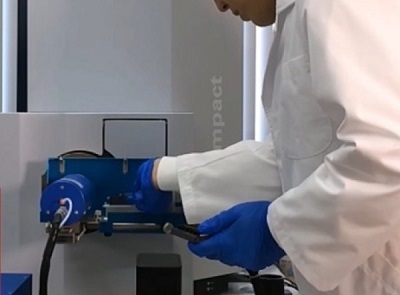
The ionRocket from BioChromato is a temperature-heating device for direct thermal desorption and pyrolysis of samples, prior to ionization and analysis by mass spectrometry. Using ionRocket a temperature gradient from ambient up to 600ºC can be achieved in just a few minutes. This enables thermoplastic resins to be rapidly pyrolyzed and then introduced into the DART-MS gas stream.

Subscribe to our e-Newsletters!
Stay up to date with the latest news, articles, and events. Plus, get special offers from Labcompare – all delivered right to your inbox! Sign up now!

More News

  • Researchers Propose New Regulations for Food Packaging Chemicals

    Scientists have proposed a new way to prioritize regulatory review of the more than 15,000 chemicals used in food packaging and other food contact materials, most of which currently lack the safety data needed to protect consumers. read more
  • Brain Activity Mirrors the Shape of Each Breath

    Each individual breath—not just breathing rate—is closely linked to the pattern of electrical activity in brain regions tied to cognition, emotion and memory, according to a new study that could help explain how breathing disorders turn deadly. read more
  • Body's Organs Age in Distinct, Synchronized Waves

    The human body doesn't age at a single, steady pace. Instead, each organ follows its own timeline, and organs that age quickly tend to have "aging partners" that speed up in sync, according to a new study that mapped structural aging across 40 types of tissue. read more