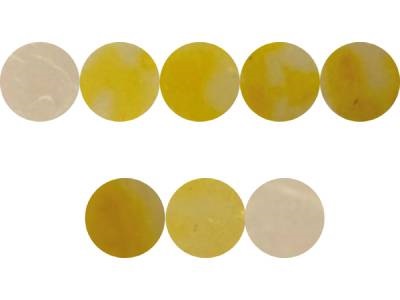
A new film reacts to nitrite anions through a color change, turning darker with higher nitrite levels. Credit: Adapted from ACS Applied Materials & Interfaces 2022, DOI: 10.1021/acsami.2c09467
Nitrates and nitrites are common additives in meat products and are used to prevent bacterial growth, enhance flavor and preserve the fresh red or pink color of the meat. Nitrates are relatively stable and inert, but may be converted to nitrite ions in the body, and nitrite may react to form nitrosamines under acidic or high-heat conditions. Nitrosamines have been linked to the development of various cancers, which is why understanding nitrite levels in food can be important to many consumers, and easy, rapid detection methods can help consumers make informed decisions about the food products they purchase. Researchers from the Universidad de Burgos recently developed a color-changing stick-on sensor and smartphone app that can allow for analysis of nitrite levels in less than 20 minutes.
The researchers developed a material film they call “POLYSEN,” which is short for “polymeric sensor.” The material is made from hydrochloric acid and four monomers (VP, MMA, SNH2 and HPMA), and allows for nitrite detection through a four-step azo coupling reaction. When the film is placed on a food sample, the nitrite anions first react with the hydrochloric acid to form nitrosyl cations, which then react with aniline units in the SNH2 monomer to form a benzenediazonium salt derivative. This benzenediazonium salt derivative then immediately reacts with the phenol units in the HPLM monomer to form a yellow-red azo compound, which can be visualized after development in an aqueous sodium hydroxide solution (NaOH).
The material was punched into disks that can be placed on meat samples like a sticker, and the sensor remains on the meat for 15 minutes before being dipped in the aqueous NaOH solution for one minute. Once the film is developed, the user can analyze the nitrate levels using a smartphone app by photographing the test sensor alongside five “color chart” disks used on samples of known nitrite levels to calibrate the system. The app automatically calibrates based on the color chart and analyzes the test sensor, providing a nitrite concentration result to the user.
The researchers compared the results of their method using POLYSEN and the app against the ISO 2918:1975 reference method for the detection of nitrite anions, which requires more than an hour of sample preparation and the use of a spectrometer, and found that the methods yielded very similar results. These tests were conducted on both meat samples treated with nitrite by the researchers, and on store-bought meats. Additionally, the researchers conducted a migration study of the POLYSEN film and found that the material complies with Commission Regulation (EU) No. 10/2011 relating to plastic materials that come in contact with food. This research was published in ACS Applied Materials & Interfaces.
The authors wrote that the POLYSEN and app method offers a fast, low-cost and easy way to determine nitrite levels in meat products, and could potentially be used by an unskilled consumer to test store bought products in the future.