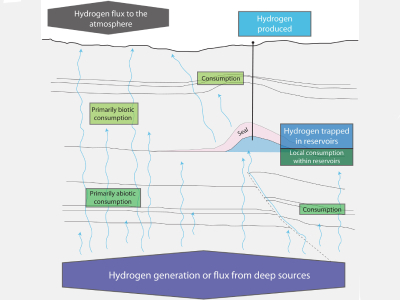
Conceptual model of geologic hydrogen resources. Credit: Science Advances (2024). DOI: 10.1126/sciadv.ado0955
Based on their newly developed model, U.S. Geological Survey researchers believe the Earth's subsurface could hold 5.6 × 10⁶ million metric tons of hydrogen. While researchers have known that hydrogen is produced through chemical reactions in rocks, it was not until the discovery of large reservoirs in Albania and west Africa that the potential size of hydrogen reservoirs was understood.
The model created by the team, published in Science Advances, allowed the team to generate estimates of the likely amount of hydrogen stored in the rocks and reservoirs of Earth's subsurface. To make these estimates, the team took an existing model which contained some data including hydrogen characteristics and where it has been found so far, and added other known factors such as the amount found in reservoirs and how much hydrogen is leaking out of rocks.
After completion the model showed there could be anywhere from 1 billion and 10 trillion tons of natural hydrogen in the stratum. While these reservoirs could provide massive quantities of natural hydrogen, the team does acknowledge the fact that much of this hydrogen is inaccessible. Despite this, harvesting just 2% of this natural hydrogen could provide all of humanity’s energy needs for nearly two centuries, making the hydrogen stores an attractive target for the energy sector.