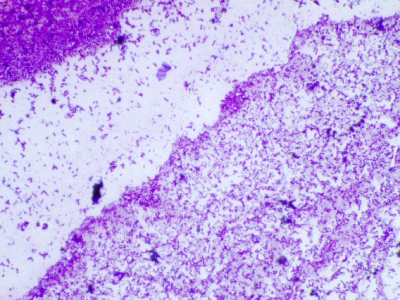
UCLA researchers have developed a novel virtual Gram staining technique which could transform the way that microbiologists stain and classify bacteria. The technique, which employs artificial intelligence, bypasses the traditional chemical staining process and converts microscopic bacteria images into their Gram-stained equivalents.
The work, published in Science Advances, represents a significant advancement in bacterial differentiation while addressing long standing challenges found in traditional staining methods. In their research, the team used darkfield microscopy to capture high resolution images of unstained bacteria which was then analyzed by deep learning technology to transform them into their gram-stained equivalents.
"Traditional Gram staining, while fundamental to microbiology, has limitations that can impact diagnostic accuracy," explained Dr. Ozcan, the study's corresponding author. "Our virtual staining approach eliminates these variables, providing consistent, rapid results without the need for chemical reagents or manual processing of samples performed by microbiology experts."
The method could offer labs countless advantages by enabling rapid bacterial differentiation without the chemical staining step. This not only streamlines the process but reduces operational costs by eliminating the need for staining reagents and materials while reducing the time it takes to process samples. Additionally, the method presents a promising path towards real-time analysis of label-free live bacteria. By removing the need to fix bacteria, darkfield microscopy can work with label free live organisms.