Argonne National Laboratory researchers have developed an innovative solution to create thin films from electronic polymers using an AI-driven automated laboratory. Electronic polymers are a novel class of polymer which combine the flexibilities of plastic with the functionality of metal resulting in a material which could lead to revolutionary breakthroughs in wearable devices and energy storage.
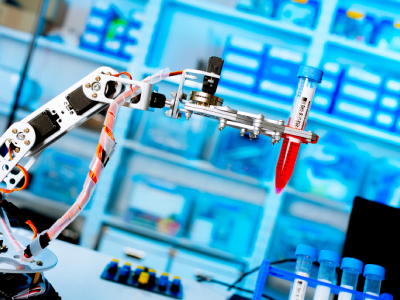
In their research, published in Nature Communications, researchers in the Center for Nanoscale Materials utilized a self-driving materials laboratory called Polybot to facilitate autonomous discovery by combining laboratory robotics and artificial intelligence.
"Polybot operates on its own, with a robot running the experiments based on AI-driven decisions," said Jie Xu, a scientist at Argonne. "We are creating a method that highlights how AI and automation can transform chemical engineering and materials science."
By relying on Polybot, the researchers were able to resolve key challenges in electronic polymer processing including optimizing conductivity while reducing coating defects. The fully automated platform developed streamlines formulation, coating, and post processing, allowing researchers to rapidly analyze the collected data.
As a result, the team was able to formulate thin films which matched the average conductivity of the highest standards that are currently achievable. Additionally, the team developed new "recipes" which can be used to for large-scale production of the films.
"This project is just the beginning," Xu said. "We've shown that our approach works. Next, we want to dive deeper into using AI and automated processes to tackle more real-world challenges and help discover new materials."