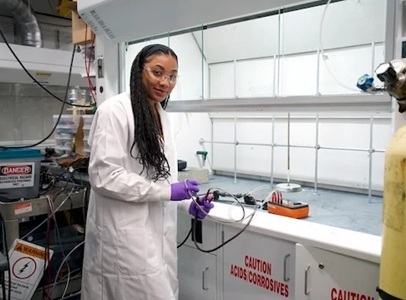
Phelecia Scotland is a graduate student at Rice. Photo courtesy of Rice University.
Researchers at Rice University have developed a method that not only eliminates PFAS from water systems but also transforms waste into high-value graphene, offering a cost-effective and sustainable approach to environmental remediation.
Traditional methods of PFAS disposal are costly, energy-intensive and often generate secondary pollutants, prompting the need for innovative solutions that are more efficient and environmentally friendly.
This new method, however, employs flash joule heating (FJH) to negate these challenges. By combining granular activated carbon (GAC) saturated with PFAS and mineralizing agents like sodium or calcium salts, the researchers applied a high voltage to generate temperatures exceeding 3,000 degrees Celsius in under one second. The intense heat breaks down the strong carbon-fluorine bonds in PFAS, converting them into inert, nontoxic fluoride salts. Simultaneously, the GAC is upcycled into graphene, a valuable material used in many industries.
The results, published in Nature Water, yielded more than 96% defluorination efficiency and 99.98% removal of perfluorooctanoic acid (PFOA), one of the most common PFAS pollutants.
Tests confirmed that the reaction produced undetectable amounts of harmful volatile organic fluorides, a common byproduct of other PFAS treatments. The method also eliminates the secondary waste associated with traditional disposal methods such as incineration or adding spent carbon to landfills.
“With its promise of zero net cost, scalability and environmental benefits, our method represents a step forward in the fight against forever chemicals,” said study author Phelecia Scotland. “As concerns over PFAS contamination continue to grow, this breakthrough offers hope for safeguarding water quality and protecting public health worldwide.”
Information from Rice University