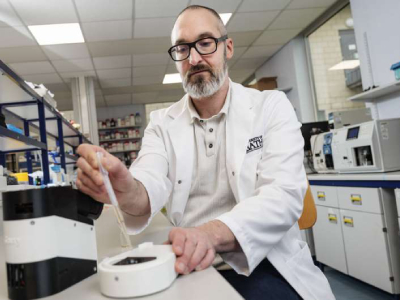
Chris Pudney operating the drug-detection device developed at the University of Bath. Credit: University of Bath
UK based researchers at the University of Bath have developed a novel portable device which can intently detect the presence of dangerous illicit drugs such as benzodiazepines and synthetic opioids, even at extremely low concentrations. Existing mobile technologies struggle to detect the presence of these drugs which are currently a major contributor to global drug overdoses.
The new device, which was recently described in the journal Analytical Chemistry, operates similar to an ultraviolet spectrometer and will allow for cheap high volume testing and on-the-spot analysis providing insights into not only the contents, but also concentration of illicit drugs in a sample.
The researchers believe the device could be an important step in harm reduction by providing life saving insights into the precise composition of illicit substances when deployed in areas with illicit drug use such as night clubs and festivals.
"Now, more than ever, there are serious health risks associated with taking all drugs. People may think they have bought something relatively unharmful—perhaps a substance they know well—but the drug they have may in fact be contaminated with a far more dangerous and more addictive substance that could endanger their lives," concluded Biochemist Professor Chris Pudney.
"This is why drug checking is so important and so needed. We need simple, instant detection that anyone in a drug and alcohol service can use to support their clients."