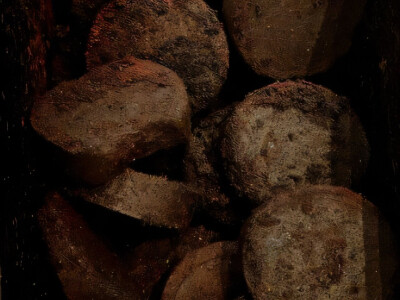
Coffee waste from Starbucks in Dubai, UAE, co-pyrolyzed with PET plastics to produce activated carbon for CO₂ capture. Credit: Haif Aljomard
Researchers have patented a novel technology which uses spent coffee grounds (SCG) along with polyethylene terephthalate (PET) waste to form a highly effective CO2 adsorption material. Thanks to the availability of the raw materials required for the system, the novel tech provides an affordable approach to carbon capture.
Describe in detail in their recent patent application, the technology uses SCG, PET, and potassium hydroxide to produce activated carbon through co-pyrolysis. Operating at an eco-friendly temperature of only 600°C, the technique provides a more sustainable approach to climate change mitigation while offering waster valorization.
"This invention repurposes two abundant waste streams—coffee and plastic—into a high-performance adsorbent," Dr. Aljomard said. "The resulting activated carbon shows strong potential for capturing CO₂ from fossil fuel-based energy systems, contributing to the reduction of air pollution."
"Transforming spent coffee grounds and plastic waste into high-quality activated carbon offers economic, social, and environmental benefits," added Co-inventor Professor Chaouki Ghenai. "Through carbonization and chemical activation, we eliminate the need to landfill these materials, protecting the environment from their harmful effects."
"This invention exemplifies circular economy principles by integrating waste streams for dual valorization and upcycling into valuable products," he added.
The inventors anticipate significant applications for the tech beyond water or air purification, pointing out that the technology could be industrialized for use in solvent recovery, natural gas purification, process gas purification, and countless other applications.