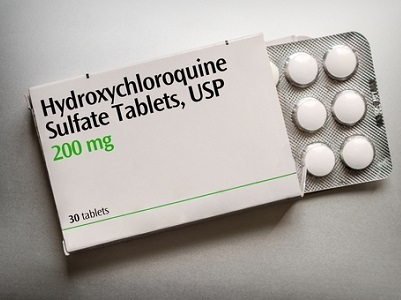
The U.S. Food and Drug Administration has revoked the emergency use authorization (EAU) of chloroquine and hydroxychloroquine to treat COVID-19 patients, citing poor effectiveness and severe side effects. The public health agency determined the legal criteria for issuing an EUA can no longer be met as the “potential benefits of the medications no longer outweigh the known and potential risks,” including ongoing serious cardiac adverse effects seen and documented in some patients.
The FDA granted an EUA for chloroquine and hydroxychloroquine on March 28, 2020 amid the height of the coronavirus epidemic. Both medications are approved to treat or prevent malaria, with hydroxychloroquine also approved to treat some autoimmune conditions, such as lupus and rheumatoid arthritis.
As clinical trials progressed, however, health outcomes for COVID-19 patients treated with hydroxychloroquine or chloroquine did not show positive results.
For example, a Brazilian study that planned to test the effectiveness of a low and high dose of chloroquine on severely ill COVID-19 patients had to be halted when 25% of patients who received the higher dose developed heart rhythm problems. Cardiac rhythm problems are a known side effect of chloroquine, even for patients who take it for malaria.
The breadth of data for hydroxychloroquine usage is larger, but similarly poor and/or inconclusive. The first controlled study led by a team at the Shanghai Public Health Clinical Center in China in February concluded that disease progression was statistically similar between patients who received hydroxychloroquine and those who did not. On the contrary, results from a placebo-controlled trial at Renmin Hospital of Wuhan University in Wuhan, China indicated that patients hospitalized with mild COVID-19 recovered more quickly with addition of the drug than with a placebo. On March 20, French scientists published a study of 20 COVID-19-positive patients claiming treatment with hydroxychloroquine significantly reduced viral load. However, that was followed by a study in veterans that showed hydroxychloroquine actually increased mortality rates for the patients treated with the antiviral medication.
“Recent results from a large randomized clinical trial in hospitalized patients…demonstrated that hydroxychloroquine showed no benefit on mortality or in speeding recovery. This outcome was consistent with other new data, including data showing that the suggested dosing regimens for chloroquine and hydroxychloroquine are unlikely to kill or inhibit the virus that causes COVID-19. The totality of scientific evidence currently available indicate a lack of benefit,” the FDA said in its statement regarding the EUA.
On April 23, 2020, the National Institutes of Health issued guidance on the therapeutic options for COVID-19, saying there was insufficient clinical data to recommend the use of hydroxychloroquine. Now, nearly two months later, the FDA has officially revoked the medication’s EUA, along with chloroquine.
Issued May 4, 2020, the EUA for remdesivir is still active and recommended by NIH’s COVID-19 Treatment Guidelines Panel. Remdesivir, a direct acting antiviral drug that inhibits viral RNA synthesis, is an investigational drug not currently approved for any indication. Preliminary results from a National Institute of Allergy and Infectious Diseases randomized, controlled trial indicated patients who received remdesivir had a 31% faster time to recovery than those who received a placebo.
At this time, remdesivir is the only medication recommended for hospitalized patients with confirmed COVID-19.