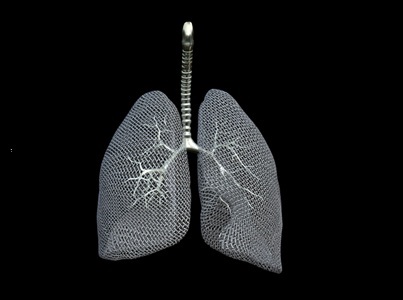
A team of scientists have developed a simple method for automated manufacturing of lung organoids. Producing organoids in bulk would allow testing of early-stage experimental drugs without the use of animal material. Eventually, personalized organoids could be grown from patients’ own tissue to test potential treatments.
Lung organoids are a promising option for research, but until now, they required too much manual work for them to be used in preclinical medical testing.
First, researchers have to grow the cells in a cell culture dish, then detach them from the dish and “animate” them to form small cellular aggregates. This is done by placing a certain number of cells in an anti-adhesive dish. The cells then float together and form embryoid bodies. These structures are treated with various growth factors, substances that are typically found in the lungs or during lung development. In the presence of these substances, the cells transform into various cell types that are found in the lungs.
For the research, the scientists put their embryoid bodies into a special tank with a continuously stirring membrane, which contained a suitable medium for growing the organoids. They also manually cultured a control set of organoids on a conventional growth plate. The organoids spent four weeks in the tank, and were then analyzed using microscopy, immunofluorescence, immunohistochemistry, and RNA sequencing to see how the organoids had developed, what cells had formed, and how comparable they were to conventionally grown organoids.
Analysis confirmed that both sets of organoids had developed the lung-like structures representing airways and alveoli that scientists were looking for, and RNA sequencing showed that they had developed characteristic epithelial and mesodermal lung cells. Both sets developed the same types of cells, although in slightly different proportions—for instance, manually generated lung organoids contained more alveolar cells. The organoids developed in the bioreactor seemed to be larger, with fewer alveolar spheres.
The fact that the bioreactor can produce more organoids at a time, with less manual work, could be a gamechanger for lung disease research. However, more testing will be needed to establish the best conditions for organoid development, and the organoids themselves will need to be improved to mimic real-life conditions within the body better.
Data from University of Duisburg-Essen and Frontiers