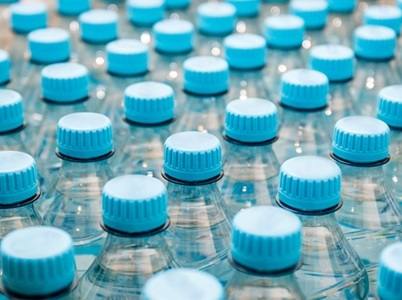
Some brands of bottled water contain significantly higher levels of microplastics than tap water, according to new research by scientists who have developed a novel method for detecting these tiny particles.
Although the extent of microplastics’ effect on human health is still unclear, many experts suggest their presence may be detrimental to human well-being in the long term. Smaller plastic pieces, called nanoplastics, are even worse as their small size means they are more likely to cross biological barriers in the body. Their extremely small size also makes them a challenge to study. In this case, the Ohio State researchers used a novel combination of scanning electron microscopy and optical photothermal infrared spectroscopy to detect and identify nanoparticles.
For the study, published in Science of the Total Environment, researchers analyzed and compared water samples from four treatment plants near Lake Erie and six different brands of bottled water. Their results showed that bottled water contained three times as many nanoplastic particles as the treated drinking water.
The researchers also found that the most common plastics in the bottled water came from the bottled water packaging, which they expected, but the source of the plastics in the drinking water is still unclear. Over 50% of all the particles detected were nanoplastics.
These details confirm that nanoplastics are a significant component of the world’s overall amount of microplastic contamination and scientists likely underestimate the true scope of their environmental threat.
“The concentrations we saw were higher than anticipated, which, unlike prior studies, we were able to attribute to the inclusion of the nanoplastics,” said John Lenhart, senior author of the study and a professor of environmental engineering at Ohio State. “That emphasis validates a lot of the information we’ve learned.”
Incorporating nanoplastics into this study’s measurements may lead to additional future insights, including whether the team’s analytical techniques could also be utilized to evaluate which treatment processes work best at removing these nanoparticles.
Data from Ohio State University